


A veil can be the finishing touch that pulls your entire bridal vision together in the most satisfying way. These days, this cherished tradition also serves as a gorgeous vehicle for personal expression.
What you’ll discover ahead is a world of inspiration for every hair length and texture, paired with smart advice on picking the veil that feels right.
You’ll also get into the nitty-gritty of how weight, positioning, and fastening techniques interact with your chosen style. Keep going to uncover a look that feels secure, stays comfortable all day, and harmonizes perfectly with your gown and wedding vibe.
Do You Have to Wear a Veil?
Making the choice to wear one belongs entirely to you. Bridal designer Tanya Maras points out that it can honor a cherished custom, pull your ensemble into focus, showcase your unique style, or deliver that full-on bridal moment you’ve pictured forever.
What truly matters is how it vibes with your dress, your hairstyle, the setting of your celebration, and your personal taste.
When a conventional veil doesn’t resonate with who you are, selecting a different accessory carries just as much significance. Further down, you’ll find stunning alternatives to the classic veil, from dramatic capes and ethereal wings to lush floral crowns, elegant combs, sculptural headpieces, and delicate decorative pins.
Wedding Hairstyles For Long Hair With Veil
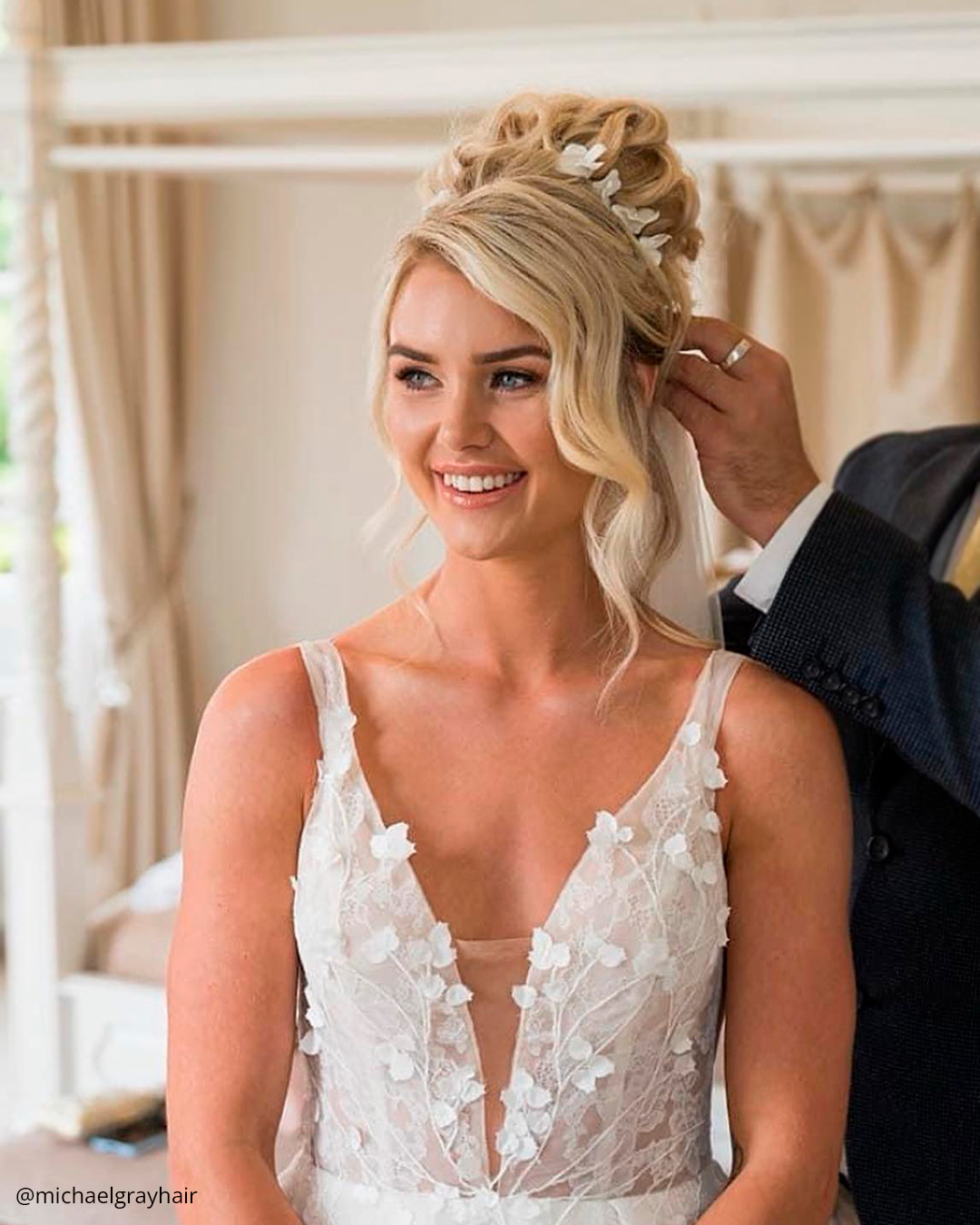

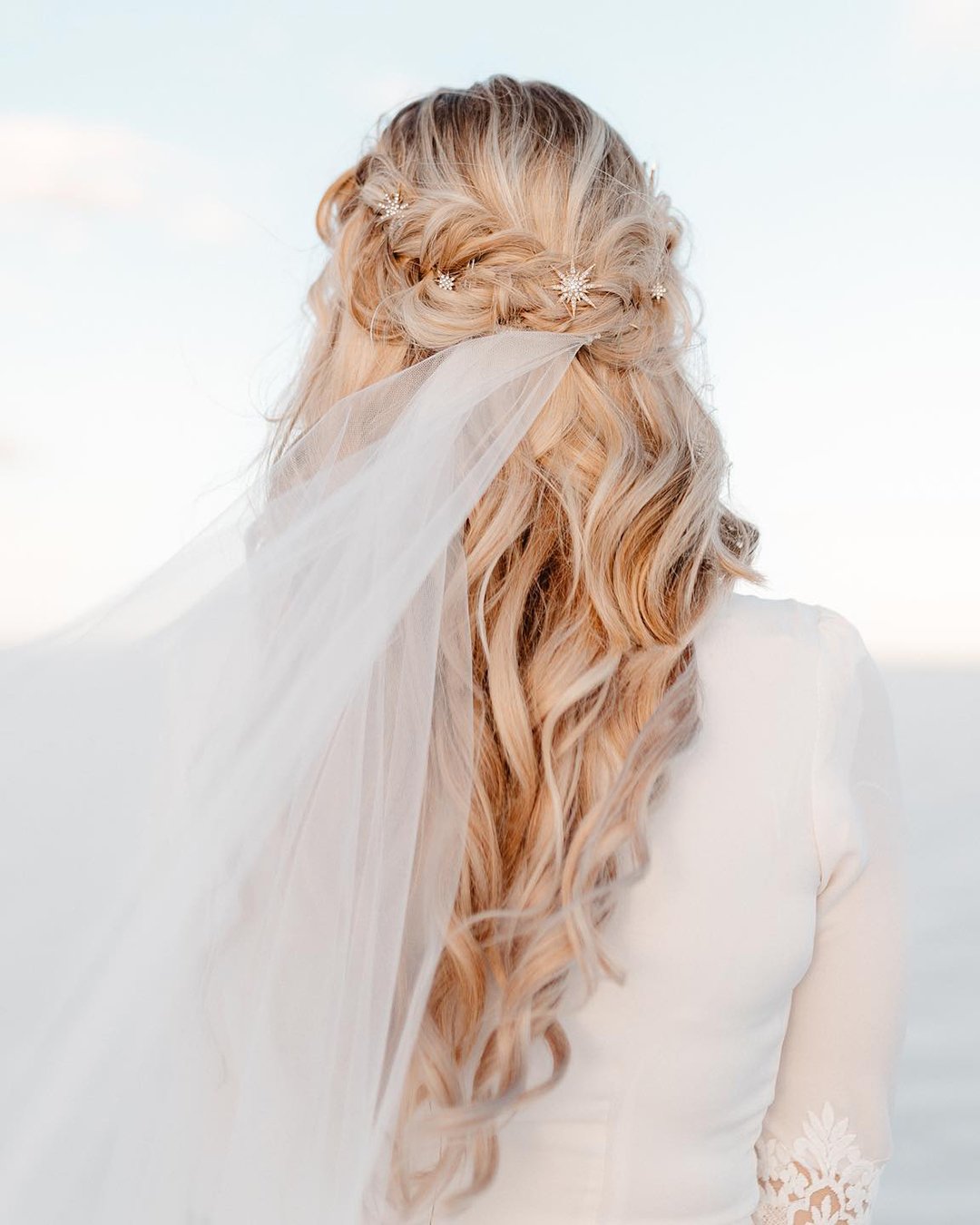


Long locks unlock a universe of styling possibilities, making them a dream canvas for any wedding theme. Flowing tresses look breathtaking in half-up half-down arrangements and polished updos paired with a veil.
Letting your hair cascade freely is also wonderfully achievable, even though the veil won’t have a bun or structured base to rest on.
So how do you handle that? Anchor your veil with bobby pins or bring in some clip-in extensions to create that crucial holding point.
If you’re puzzling over how to keep your veil securely in place while the whole look stays flawless, expert hairstylist Michael Gray weighed in with some wisdom. “The key to a comfortable and secure veil is to use a finer tooth comb for placement,” the stylist suggests.
Additionally, Michael recommends a prep technique that works wonders: “Start with a strong backcomb at the base, then secure the veil with horizontal grips on either side to prevent any movement.” And for those gorgeous hair-down moments? “A hidden scalp braid under the veil’s placement area can work wonders for keeping it stable without being visible.”
For a dose of visual inspiration, feast your eyes on the delicate, classic bridal work with a veil from Michael Gray Hair.
Medium Length Hair Wedding Hairstyles With Veil
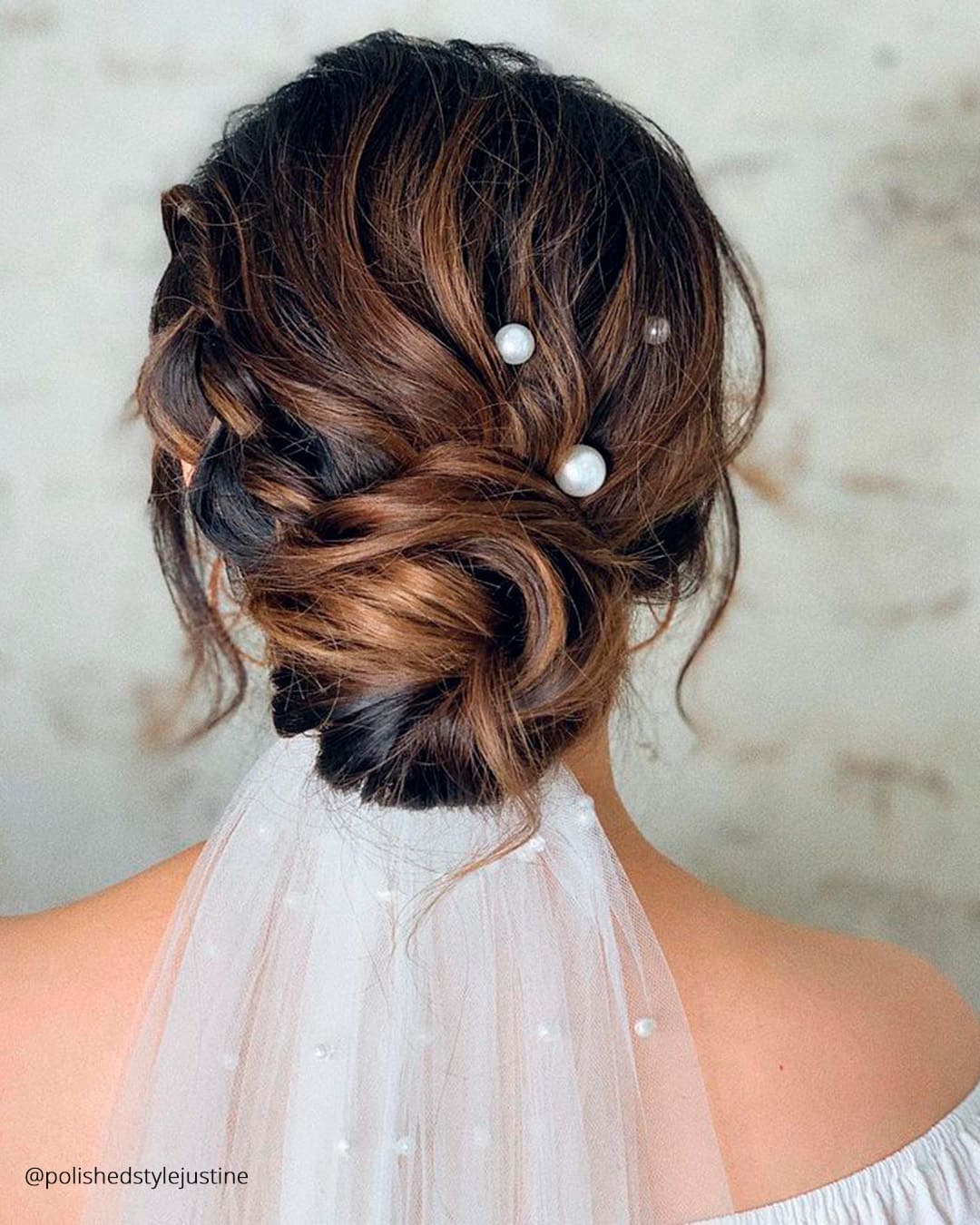
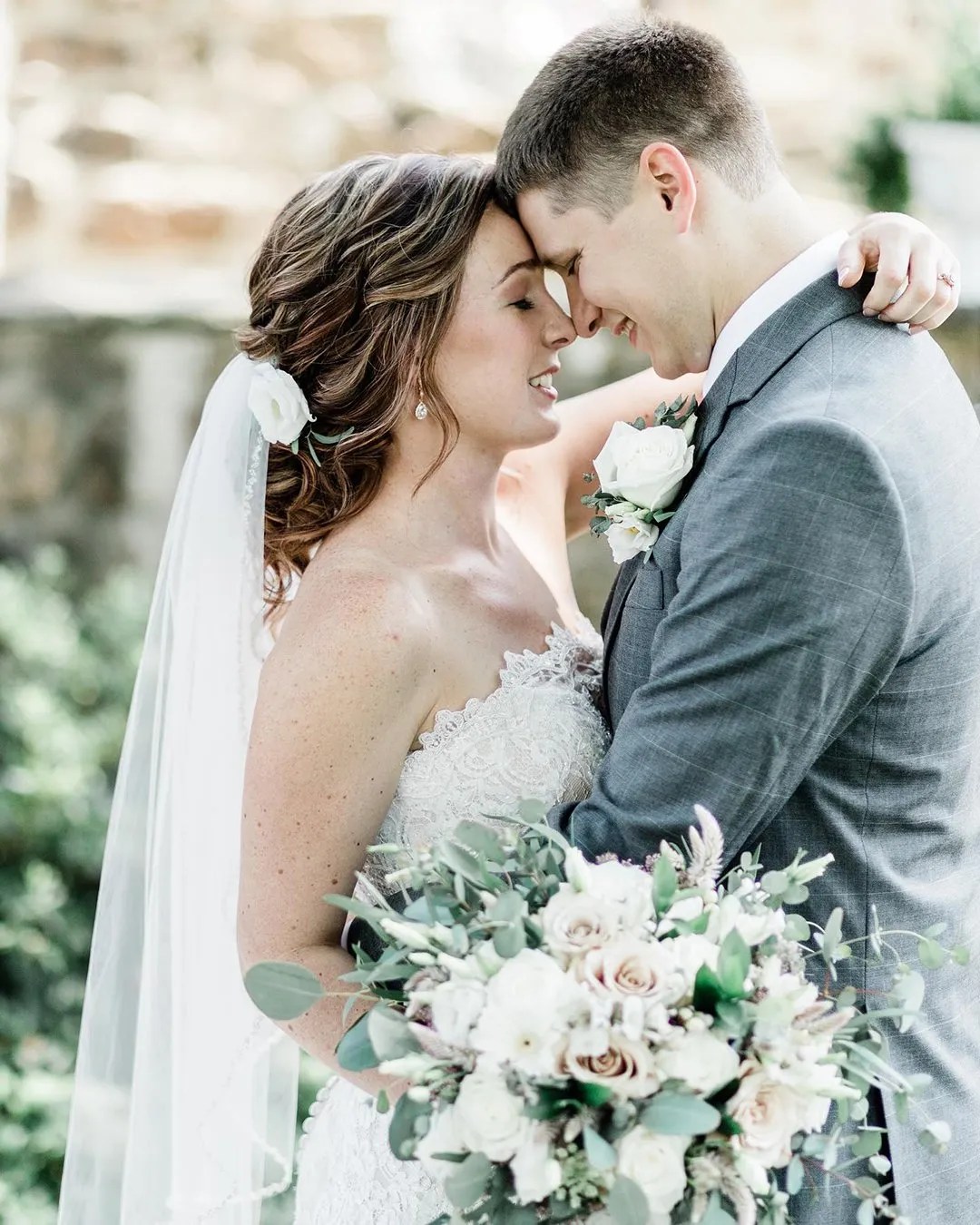

A classic chignon, a delightfully messy bun, and low-slung updos rank among the top-tier choices for medium hairstyles with a veil. You can give the effect a lift by anchoring the veil on the crown of your hairstyle.
Alternatively, fastening it just below the bun creates a lovely illusion of extra length.
For a vibe that’s perfectly undone yet otherworldly, reach for those tousled curls or soft, flowing waves. The ever-popular half-up half-down look is another total gem for this hair length.
The veil and the style itself should find their home either at the crown of your head or tucked below. To absolutely nail this aesthetic, weave in some beaded hairpins, decorative combs, and other thoughtfully chosen bridal accents.
Short Wedding Hairstyles With Veil
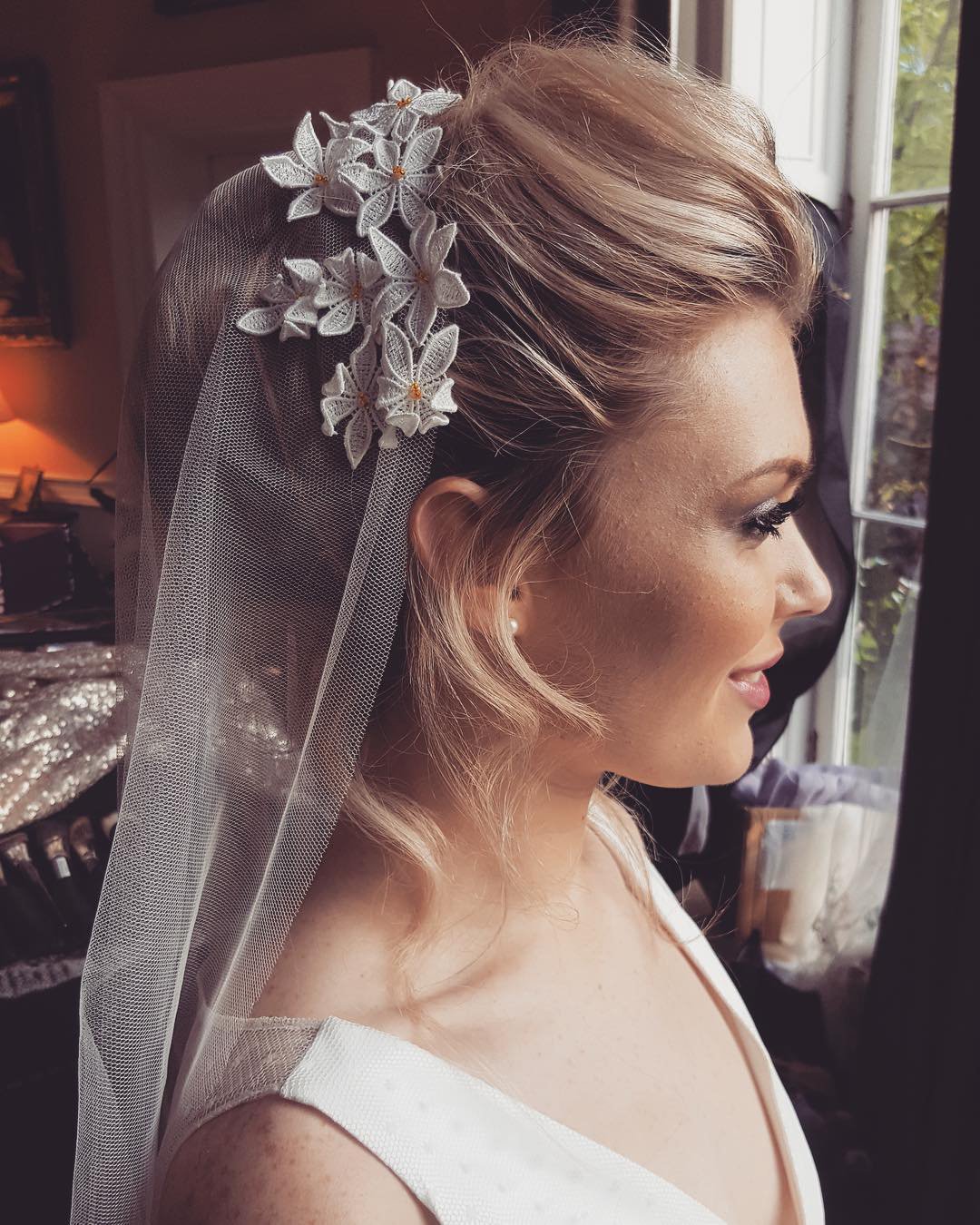


Brides sporting shorter cuts can absolutely radiate elegance and romance with the right veil. Pixie styles often find their perfect match in a birdcage design, a short veil, or another airy, lightweight piece.
A charming clip, a sleek headband, or some cleverly concealed pins can hold the veil steady without swallowing the haircut.
A chic short bob opens up even more styling territory. You might add soft bends, glossy sculpted waves, or a glass-smooth finish, then position the veil just above the shape or tuck it securely beneath a gently pinned-back section.
For a dependable attachment on short strands, pick a method scaled to your cut’s length.
A mini comb, an X of crossed hair grips, traditional bobby pins, or a headband-supported fastening all work beautifully on a pixie. A bob might also accommodate a tiny hidden braid or a concealed elastic anchor when sufficient length is available.
Featherlight veils are typically the most pleasant option for short hair. Weighty fabric or a large comb can pull uncomfortably on limited anchor spots, so always put your veil through its paces during the hair trial to guarantee it stays put and feels good.
Looking for wedding hairstyle ideas? Check out top Pinterest trends!
Wedding Veil Length Guide: How to Choose the Right Veil Length
The length of your veil dramatically shifts how it collaborates with your dress, your hairstyle, the setting, and the total bridal picture. As you figure out how to select the right length, think about the cut and train of your gown, the formality of the venue and the room you’ll have to move, the architecture of your hairstyle, where it will attach, and whether you plan to keep the veil on past the ceremony.
The material and how it’s put together are also key players here. A veil with lace, pearls, or heavy embellishments may demand more support than a whisper of airy tulle, while a two-tier style is generally heavier than a single-layer design.
A mantilla veil spans multiple lengths, so it’s best treated as a distinct style rather than a specific measurement.
Short and Face-Framing Veils: Birdcage, Blusher, and Shoulder Lengths
A birdcage veil is a petite piece crafted from structured netting that typically drapes across part of the face. It channels a vintage or contemporary bridal energy without concealing the dress or masking most of the hairstyle.
Its small scale makes it an excellent partner for civil ceremonies, micro-weddings, bridal suits, shorter hemlines, pixie cuts, bobs, undone waves, and sleek updos.

A blusher veil serves as a face-covering layer and isn’t defined by a single hem length. It can be worn solo, connected to a longer veil, or serve as the shorter tier in a two-part veil.
During the ceremony, the blusher lifts gracefully away from the face while the longer portion stays elegantly in place.
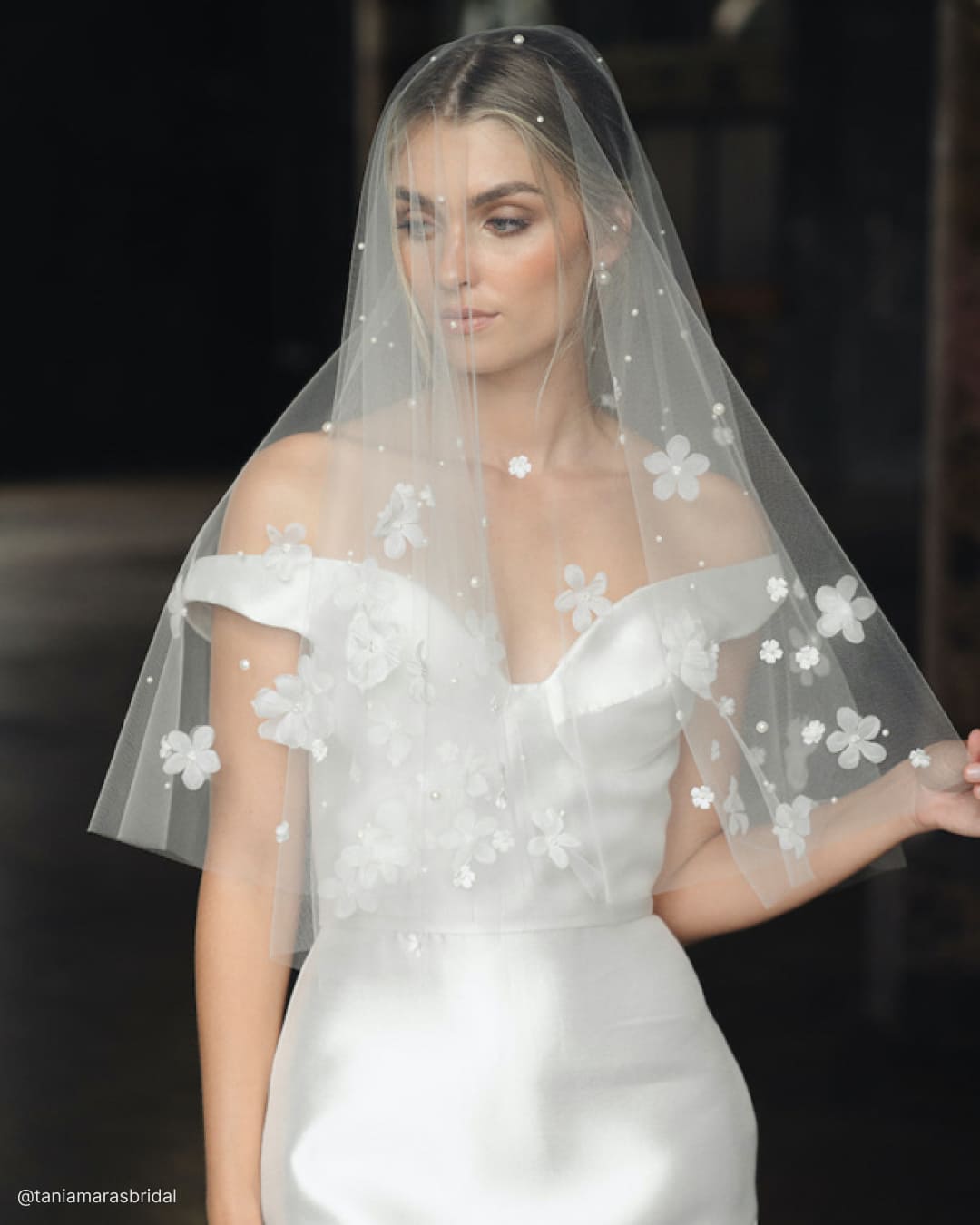
A shoulder-length veil finishes its journey near the shoulders or upper back. It introduces softness without hiding an exposed back, an ornate neckline, or a detailed bodice.
Since it’s usually quite light, it needs less structural support and keeps your hairstyle beautifully visible.

Mid-Length Veils: Elbow, Fingertip, and Waltz
An elbow-length veil generally ends around the elbows or waist, a detail that shifts with the bride’s height and the exact spot the comb is placed. It brings noticeable motion into play without veiling the entire skirt or train, striking a lovely balance for fitted dresses, A-line silhouettes, indoor vows, and open-air celebrations.

A fingertip veil tumbles to about the fingertips when the arms hang naturally at the sides. This adaptable length flatters most gown silhouettes and looks stunning with bridal updos, half-up creations, ponytails, and loose, flowing waves.
It delivers that timeless bridal effect while freeing you from the extra management a long train demands.

A waltz veil, sometimes called a ballet-length veil, usually stops around the calves or ankles. It offers a greater sense of flow and motion than a fingertip veil while staying easier to navigate than a floor-skimming style.
Brides who want to wear their veil all the way through the reception or onto the dance floor may find this length especially smart.

Long Veils: Floor-Length, Chapel, and Cathedral
A floor-length veil kisses the ground but typically doesn’t trail far behind the bride. It crafts the illusion of a long wedding veil without adding a substantial train to manage.
This length partners well with full-length gowns, elegant indoor gatherings, and outdoor spots with a smooth, clear aisle.

A chapel veil sweeps past the hem of the gown and forms a soft, romantic train behind the bride. It pairs exceptionally well with full-length dresses and gowns that feature shorter or moderate trains.
The hairstyle needs to offer a rock-solid anchor, and the veil may call for a little rearranging during portraits or when moving between locations.
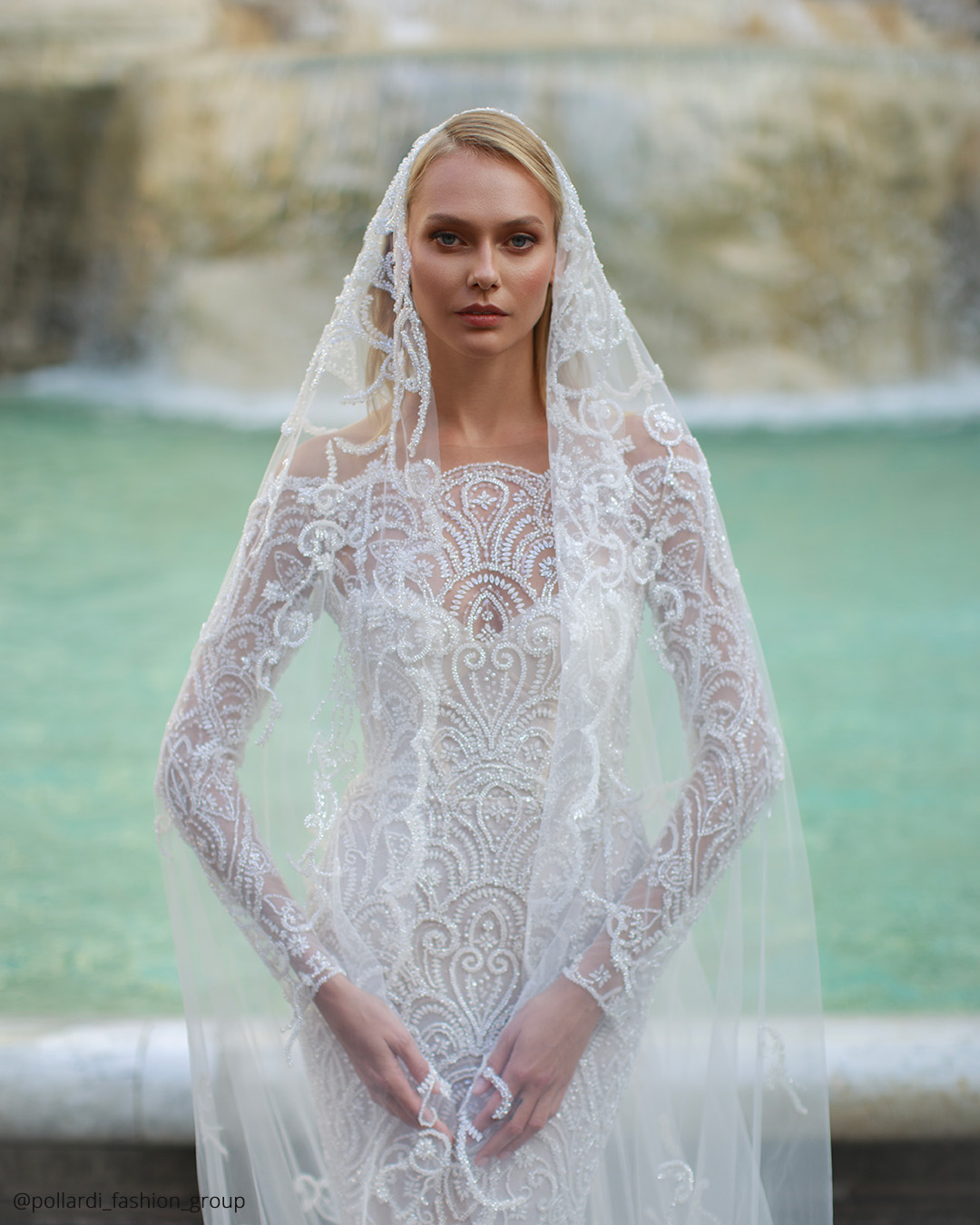
A cathedral veil produces the most dramatic and longest statement, typically stretching far beyond the wedding dress train. It feels especially breathtaking in church ceremonies, grand ballroom receptions, formal rituals, and sweeping outdoor aisles.
Hairstyles for a cathedral veil demand a powerful attachment point, whether that’s a structured updo, a firmly fixed half-up section, or another dependable base for the comb.
Because of its impressive length and weight, this veil also requires extra room and a helping hand. A stylist, planner, or trusted member of your crew can assist in arranging it for the processional, photos, and its eventual removal.

How Veil Length Works With Your Dress, Venue, and Hairstyle
For a short, modern bridal look: Birdcage, blusher, and shoulder-length veils shine at civil ceremonies, intimate weddings, bridal suits, and shorter dresses. They also flatter pixie cuts, bobs, and structured updos because they ask for minimal support and leave the hairstyle uncovered.
For a versatile and classic choice: Elbow and fingertip veils enhance the majority of wedding dress silhouettes and feel right at home at both indoor and outdoor events. They look gorgeous with half-up styles, low buns, ponytails, and unstructured waves while keeping key dress details in sight.
For softness and movement: Waltz and floor-length veils deliver a fluid, airy effect without the heft or care required for a lengthy train. They are a sensible pick for garden parties, al fresco venues, or brides who intend to keep the veil in place well past the vows.
For a formal or dramatic entrance: Chapel and cathedral veils appear particularly striking alongside full-length gowns and dresses with trains. They need a secure hairstyle foundation and ample space to glide comfortably, so hash out the positioning, reinforcement, and removal strategy with your hairstylist well before the big day.
Precise veil dimensions can shift based on the bride’s height, the comb’s angle, and the overall proportions of the piece. At your final fitting or hair run-through, observe how the veil falls from its fastening point, whether it obscures important gown details, and how smoothly it detaches after the ceremony.
Bridal Updo With Veil

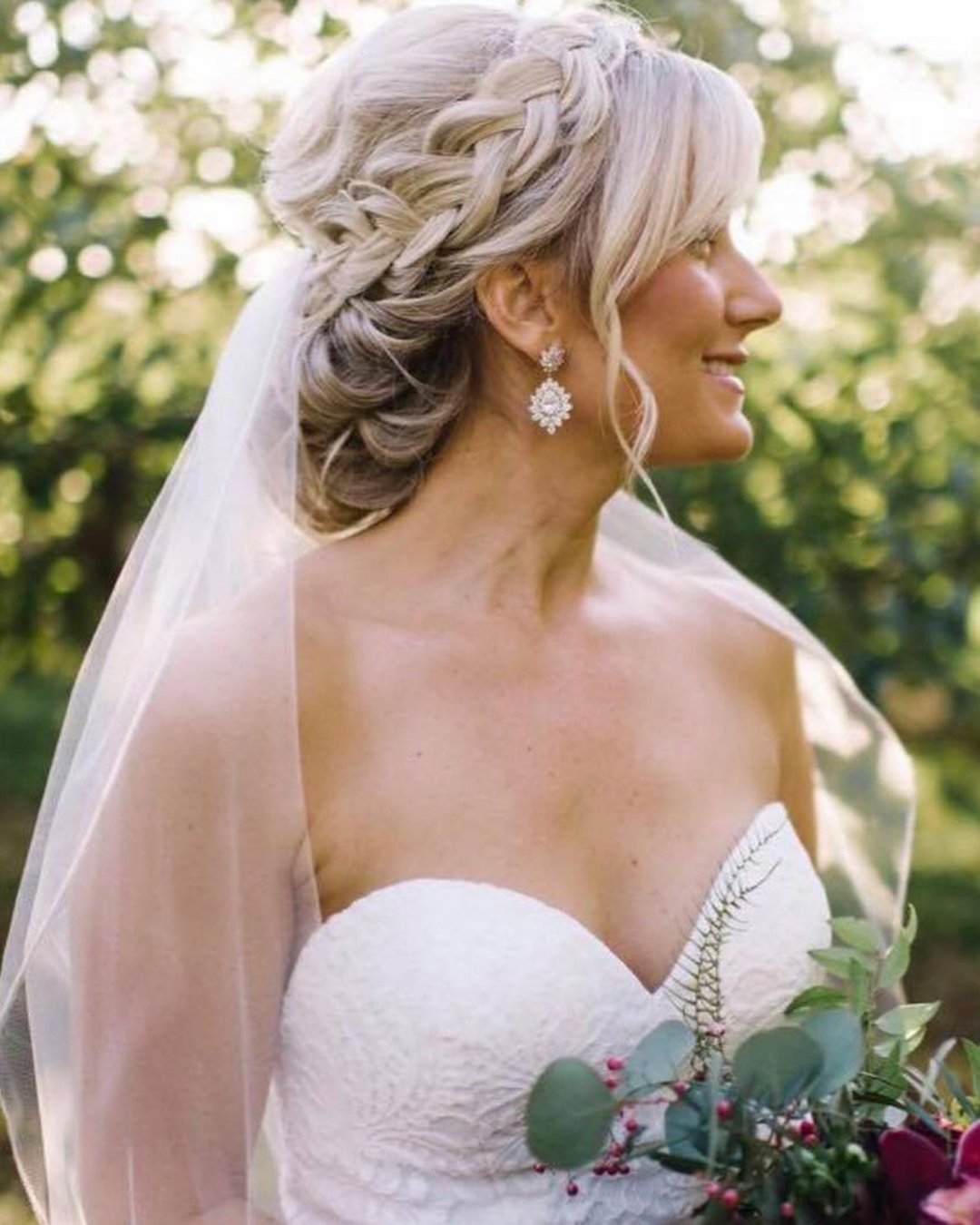

Wedding updos coupled with a veil are a practical and graceful choice, particularly when you want your hair to hold its shape steadily all day long. With a high bun, positioning the veil above it injects height and volume yet might partially obscure the style’s details.
Placing it directly behind the bun allows more of the structure to remain visible while providing the comb a sturdy foundation. A veil tucked under the bun crafts a gentler, more contemporary silhouette and puts the updo fully on display, though the stylist may lean on extra support pins to keep everything locked in tight.
A bridal ponytail with a veil can be arranged with the veil sitting above or tucked beneath the base of either a high or low style. The veil comb and any supplementary pins need to lodge firmly without causing the elastic to slip or unsettling a carefully wrapped base.
Half Up Wedding Hairstyles With Veil
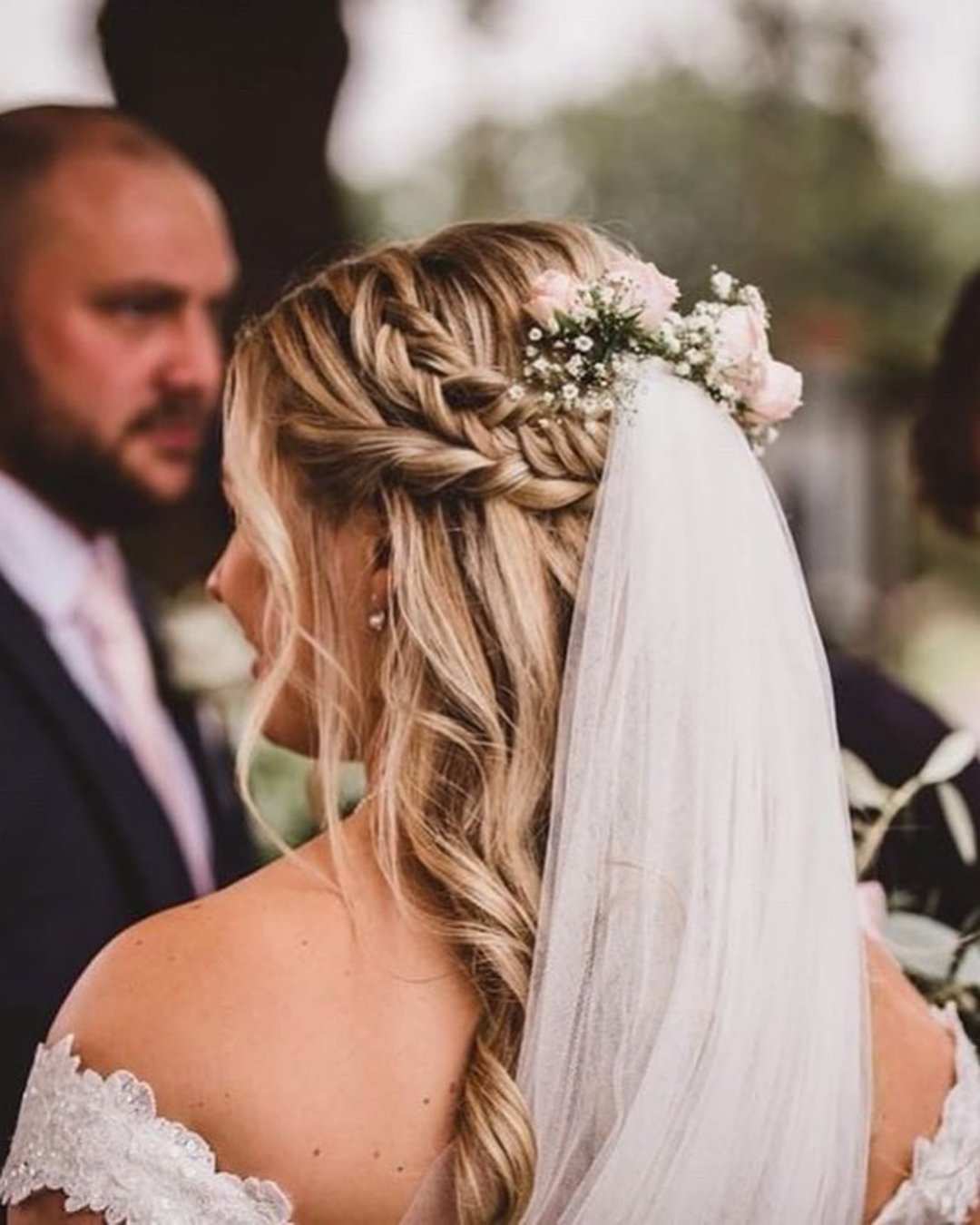


Half-up wedding hairstyles for long hair paired with a veil are absolute perfection for brides chasing a harmony of poise and dreamy romance. Suited to bohemian, rustic, classic, and garden celebrations alike, this style shines alongside gowns boasting ornate bodices or striking open backs.
It spotlights the hair’s natural length and texture while adding a touch of soft fullness.
When your veil leans simple, a curly half-up arrangement with a jeweled comb placed just above it makes a stunning choice. This duo creates an ageless, effortlessly romantic bridal moment.
The fixed half-up portion also forms a steady foundation for the veil comb, whether you opt to set the veil above the gathered hair or hide it discretely beneath. If you plan to wear a tiara or another statement bridal headpiece, carve out enough breathing room between the accessories so their respective combs and pins don’t battle for the same spot.
Side Swept Wedding Hairstyles With Veil


A side-swept wedding hairstyle with a veil makes a gorgeous decision for long or medium hair. This look feels especially magical at outdoor weddings, yet it carries just as much grace indoors.
Brushing the hair over one shoulder can accentuate your most flattering facial angle and naturally pull focus toward your smile.
The veil can be secured at the crown or tilted a bit to one side, tailored to the hairstyle and the visual effect you’re after. Side-pinned loose waves emit a soft, romantic mood, while a side braid reads as relaxed and fresh for a breezy beach celebration.
Tousled curls, gentle waves, sculpted ringlets, and cropped side parts can all be swept to one side for a refined bridal finish.
Wedding Hairstyles Down With Veil

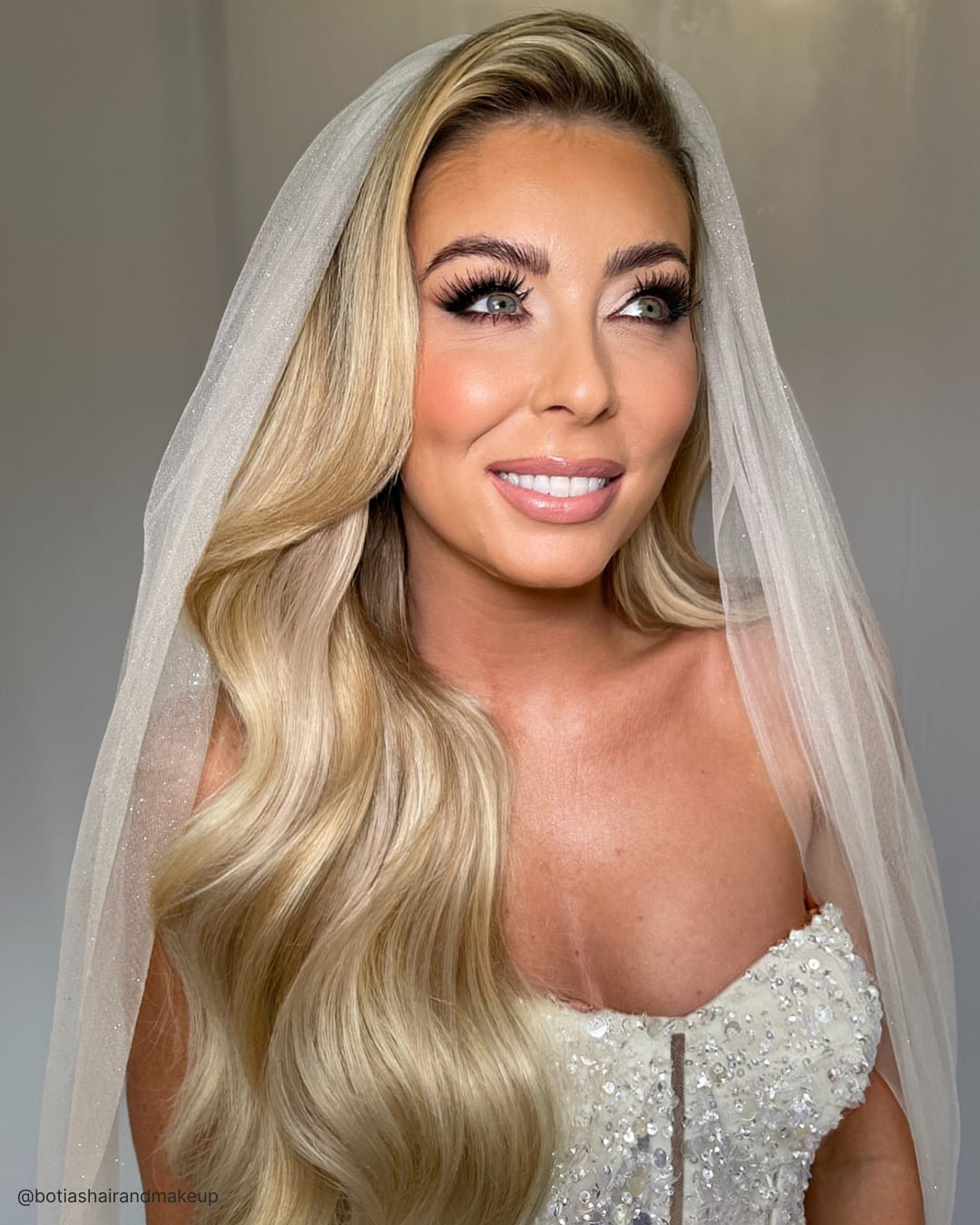
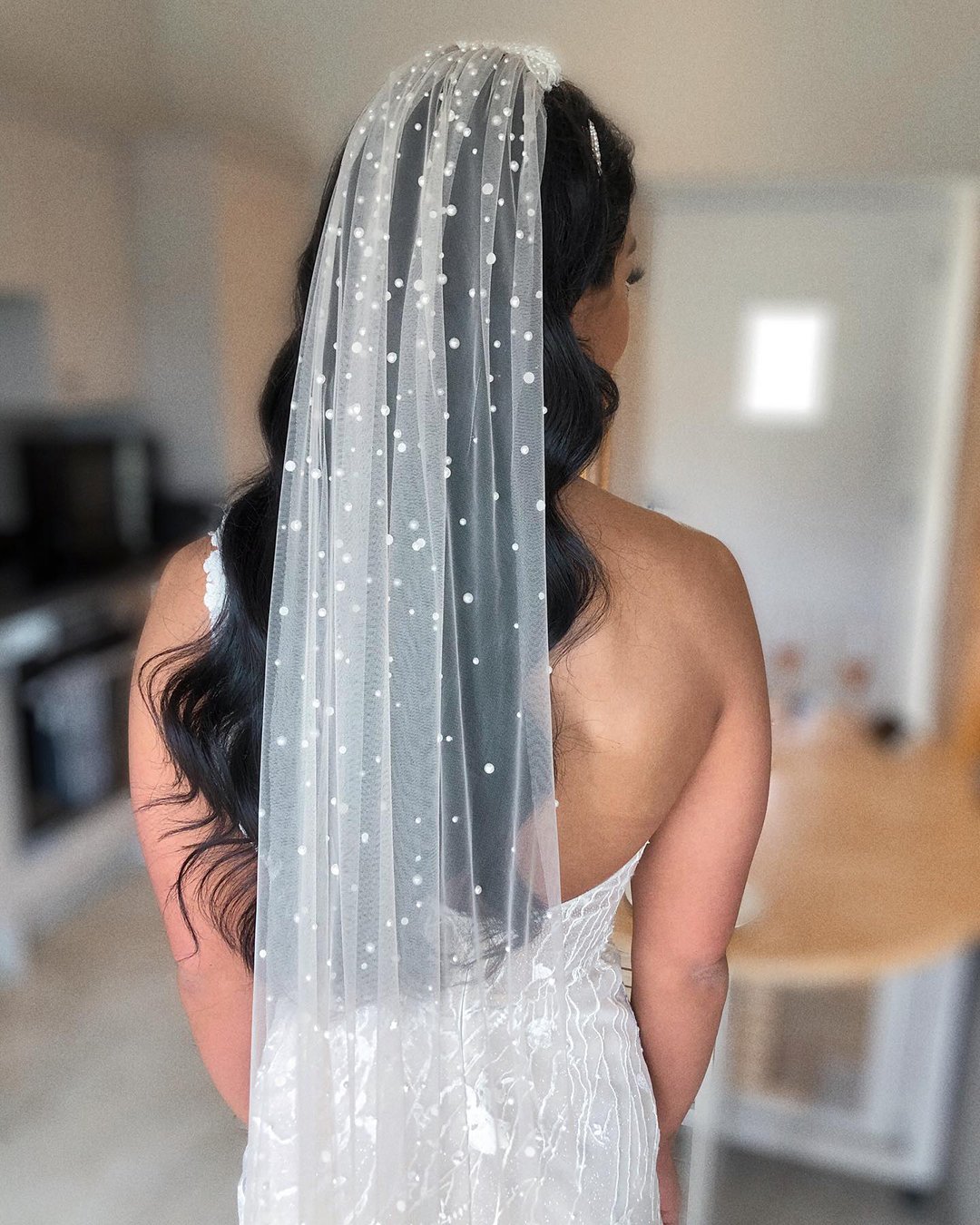
Situating the veil at the crown makes it more of a focal point and adds vertical lift to the bridal silhouette. A lower rear positioning keeps more of your loose waves or curls in the spotlight and cultivates a gentler effect.
Classic hair-down bridal looks or half-up, half-down styles with a veil frequently showcase voluminous waves and tousled curls.
These understated yet polished looks can temper the visual weight of ornate or heavily detailed gowns with ease. Mantilla veils, classic tulle veils, and Juliet cap veils all harmonize with flowing bridal hair, while fingertip and chapel-length styles play especially nicely with asymmetrical waves and strapless dresses.
For brides puzzled about how to secure a veil when hair is worn down, bridal designer Tanya Maras suggests building a hidden anchor beneath the top layer of hair. Fine, straight, or slippery strands can be bolstered with gentle backcombing, crossed bobby pins, small clear elastics, or a slim concealed braid.
The veil comb should glide into this prepared foundation rather than merely resting in loose hair, and extra pins placed across the comb’s teeth deliver even more security.
A lightweight veil typically calls for less structural support and applies less strain to the hairstyle. During your trial run, rehearse the removal process to confirm the comb won’t disrupt the curl pattern, deflate the volume, or leave the attachment area looking unfinished.
Wedding Hairstyles With Veil Front View Ideas
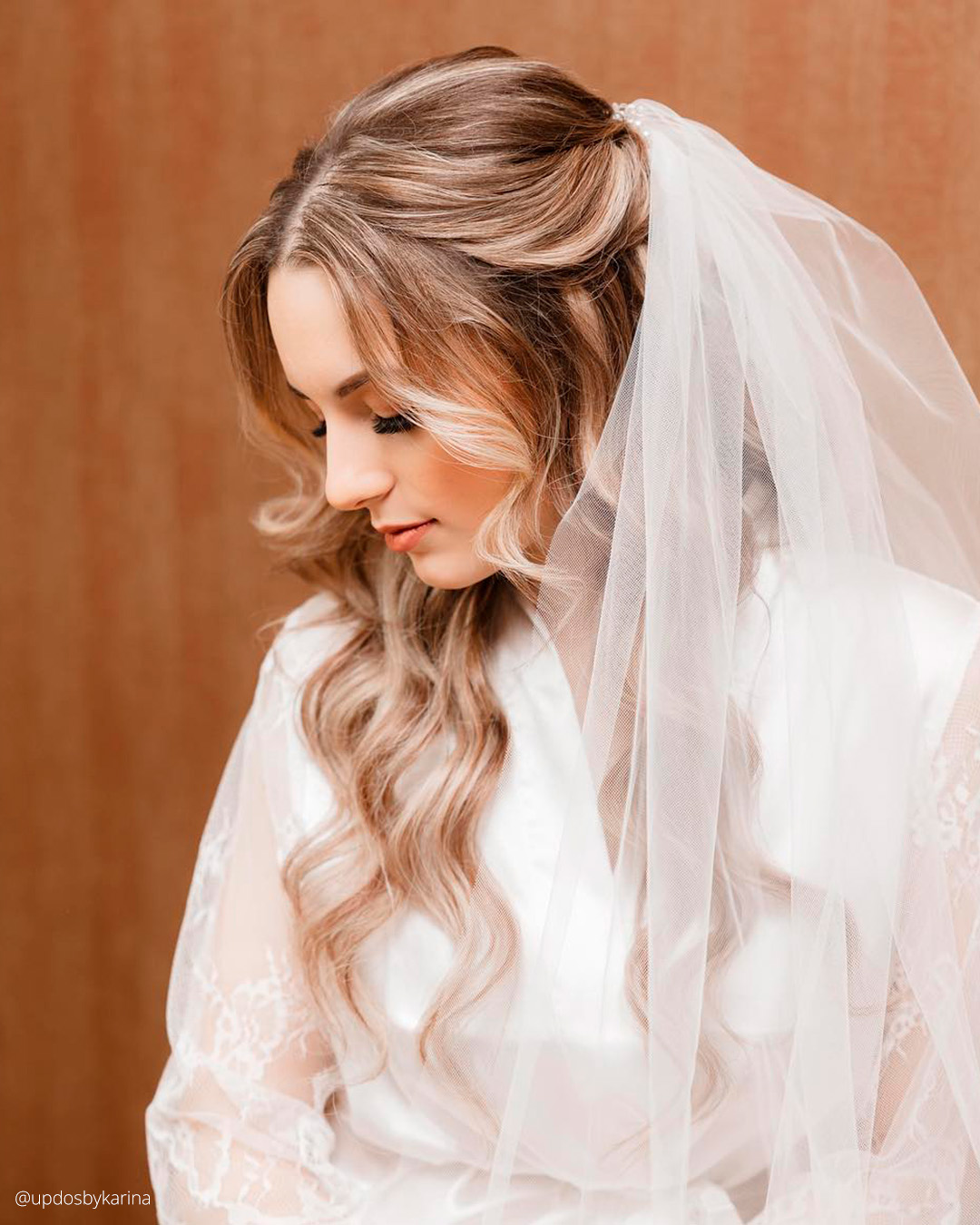


Your hairstyle needs to captivate from the front just as much as it does from behind, considering it frames your face and completes the whole bridal expression. Here are five flattering front-view approaches to explore: When picking bridal hairstyles for a round face with a veil, moderate height at the crown, a side or off-center part, and carefully placed face-framing tendrils can help craft balanced proportions.
Steer clear of setting the veil too high or too wide, since surplus volume near the crown can alter how the hairstyle appears from the front.
Wedding hairstyles with bangs and a veil should be mapped out so the comb doesn’t smother curtain bangs, blunt bangs, or a side-swept fringe. Crown positioning tends to work nicely with curtain bangs, while straight or side bangs often appear more natural when the veil sits just a touch further back.
Your ultimate pick should flatter your face shape, coordinate with your dress, match your wedding style and personal preferences, and still feel wonderfully comfortable and authentically you.
How to Wear and Secure a Wedding Veil
The way you wear and anchor a veil hinges on the architecture of your hairstyle, the selected placement, the available fastening point, and the weight of the fabric. The winning combination should hold the veil rock-steady without squashing the style, tugging at your scalp, or clashing with other bridal accessories.
Choosing the Best Veil Placement
Where you position the veil influences how much of the hairstyle stays visible, where volume appears, and how the veil reshapes your silhouette. Factor in the structure of your style, the veil’s length, and whether you want the hair or the veil to take center stage.
Over the hairstyle: This placement pushes the veil to the forefront and lays a soft, romantic layer across the hair. It works nicely with structured or voluminous updos that can shoulder the weight of the veil comb.
Behind the bun: Placing the veil behind the bun preserves most of the hairstyle in full view while allowing the bun to act as a stable anchor. It crafts a smooth, balanced transition from the updo into the fabric.
Under the bun: A veil tucked under the bun keeps the updo entirely visible and lets the fabric cascade naturally from below it. This often results in a lower, softer silhouette.
At the crown: Crown placement adds height and establishes the veil as a prominent feature from the front and side profiles. It can enhance loose waves, half-up styles, and looks with moderate crown volume.
Under a secured half-up section: The veil comb can be hidden beneath the gathered hair, using the secured half-up join as its anchor. This keeps the attachment invisible while ensuring the loose length remains on full display. Wedding Veil Under the Bun


A wedding veil under the bun drops directly from beneath the updo, producing a seamless flow from the hairstyle into the fabric. This placement keeps a low or structured bun visible and proves especially effective when you want the hairstyle, headpiece, or decorative pins to remain the main event.
A veil placed underneath the bun can suit fingertip, chapel, and cathedral-length veils, but the comb should be firmly fixed below the updo. The stylist may use crossed pins or a specially prepared support point to stop the veil from tugging downward during the ceremony.
Veil Over the Hairdo


A veil over the hairdo casts a soft layer around the style and pushes the veil into a more central role in the overall bridal appearance. Positioning the veil over bun styles or above a structured updo can introduce height, body, and motion while giving the fabric freedom to trace the contours of the hair.
This setup feels particularly impactful with chapel or cathedral veils, which generate a dramatic cascade behind the bride. Even so, the veil comb needs to sit in a secure anchor so the fabric doesn’t crush delicate details or cause the hairstyle to shift.
Choosing the Right Attachment Method
Grasping how to secure a veil starts with picking an attachment method that meshes with the hairstyle and the veil’s heft. A veil comb is the most widespread choice, but extra reinforcement might be required for slick hair, loose styles, or weightier fabrics.
Veil comb: A wedding veil comb ought to be inserted into a prepped section of hair instead of simply being stuck into loose, unsupported strands. Metal combs frequently offer a stronger grip, while clear combs deliver a more subtle finish.
Crossed bobby pins or hair grips: Two pins can be crossed beneath the hair’s top layer to form a small, hidden anchor. The comb’s teeth then slide behind the crossed pins, which work together to block movement.
Backcombed anchor: A light backcomb can generate texture and grip in fine, straight, or slippery hair. The surface should stay smooth while the concealed section underneath steadies the comb.
Hidden braid: A slim horizontal braid supplies a robust attachment spot for a veil when hair is worn down. This braid stays tucked away beneath the upper layer of waves or curls.
Elastic anchor: Small clear elastics can shape one or two hidden ponytails beneath the hair. The veil comb is then anchored into the elastic-supported section, rather than relying purely on loose strands.
Adapting the Attachment to Your Hair and Hairstyle
How to secure a veil in your hair depends on how much structure already exists. Hair length, density, texture, and natural slipperiness all influence exactly how much auxiliary support the veil will need.
Structured updo: A bun, chignon, or twisted updo generally furnishes a sturdy foundation for the comb. The veil can rest above, behind, or below the updo, depending on how much of the hairstyle you’d like to keep in plain sight.
Half-up hairstyle: A veil with half-up hair can be stationed above the gathered section or tucked away beneath it. The secured join should stay firm enough to bear the comb without causing the style to slip.
Loose hair: A veil paired with hair worn down calls for a hidden anchor since loose strands alone might not sustain the comb. Crossed pins, a concealed braid, mild backcombing, or tiny elastic anchors can offer hold without altering the visible hairstyle.
Pixie cut: A veil for short hair might require a smaller comb, a headband attachment, discreet loops, or strategically situated hair grips. Lightweight veils are typically simpler to steady in very short hair.
Short bob: A concealed braid, small elastic anchor, or crossed pins can brace the veil beneath the bob’s top section. The attachment needs testing to verify it won’t split the hair or produce a noticeable ridge.
Fine or slippery hair might demand added texture and reinforcement, while thick or textured hair often clamps onto a comb more securely. A heavy, densely gathered, or cathedral-length veil typically asks for a more powerful anchor than a featherlight single-layer veil.
Wedding Veil Hair Trial Checklist
A wedding veil hair trial gives the stylist a chance to test drive the complete look before the actual wedding day. Bring the real veil whenever feasible, as a stand-in comb or alternative fabric might not carry the same weight, width, or attachment feel.
Bring the actual veil, tiara, hair comb, pins, earrings, and every other accessory worn near the hairstyle.
Test your preferred veil placement as well as at least one backup position.
Check for any pressure, tugging, slipping, or discomfort near the attachment point.
Walk, sit, turn your head, embrace someone, and mimic a few dance moves.
Practice detaching and reattaching the veil without mussing the hairstyle.
Confirm that the veil removal process doesn’t unravel curls, drop the volume, or expose an incomplete anchor.
Capture photographs from the front, back, sides, and three-quarter angles.
Note down the precise position of the comb, hair grips, elastics, and support pins for the wedding-day stylist.
Wedding-Day Veil Timeline
A wedding-day veil schedule helps shield the veil during transit and guarantees someone knows exactly when and how to fasten or detach it.
After the hairstyle is complete: Attach a lightweight or shorter veil once the stylist has wrapped up the hair and double-checked the anchor spot.
After arriving at the venue: Think about attaching a long chapel or cathedral veil right at the venue so it won’t crease, snag on doorways, or yank on the hairstyle during the ride over.
Before the ceremony: Ask the stylist, planner, or a dependable member of the bridal party to verify the veil sits centered and locked in tight.
During portraits: Keep the veil in position for formal portraits, ceremony photos, and any planned veil-centric shots.
Before the reception or dancing: Remove a long or weighty veil if it limits movement or places too much strain on the hairstyle. A shorter secondary veil or a decorative headpiece can take its place.
After removal: Tuck the veil away in a clean garment bag or its designated veil bag, far from makeup, beverages, candles, and busy foot-traffic zones.
Prepare a backup kit: Stash extra bobby pins, hair grips, clear elastics, a compact comb, and any special fasteners employed during the hair trial somewhere within easy reach.
Designate one trusted person to learn the correct removal technique. They should support the hair encircling the attachment spot, take out any securing pins first, and gently slide the comb free without yanking on the curls or updo.
Classic Wedding Hairstyle with Veil


Classic wedding looks featuring sleek chignons, graceful ballerina buns, and sculpted finger waves project a sense of enduring refinement. Team these styles with a Mantilla or Cathedral veil for a dose of sweeping majesty.
Elevate the final effect with lace embroidery or pearl embellishments to craft an appearance that feels both sophisticated and beautifully polished.
Romantic Wedding Hairstyle with Veil


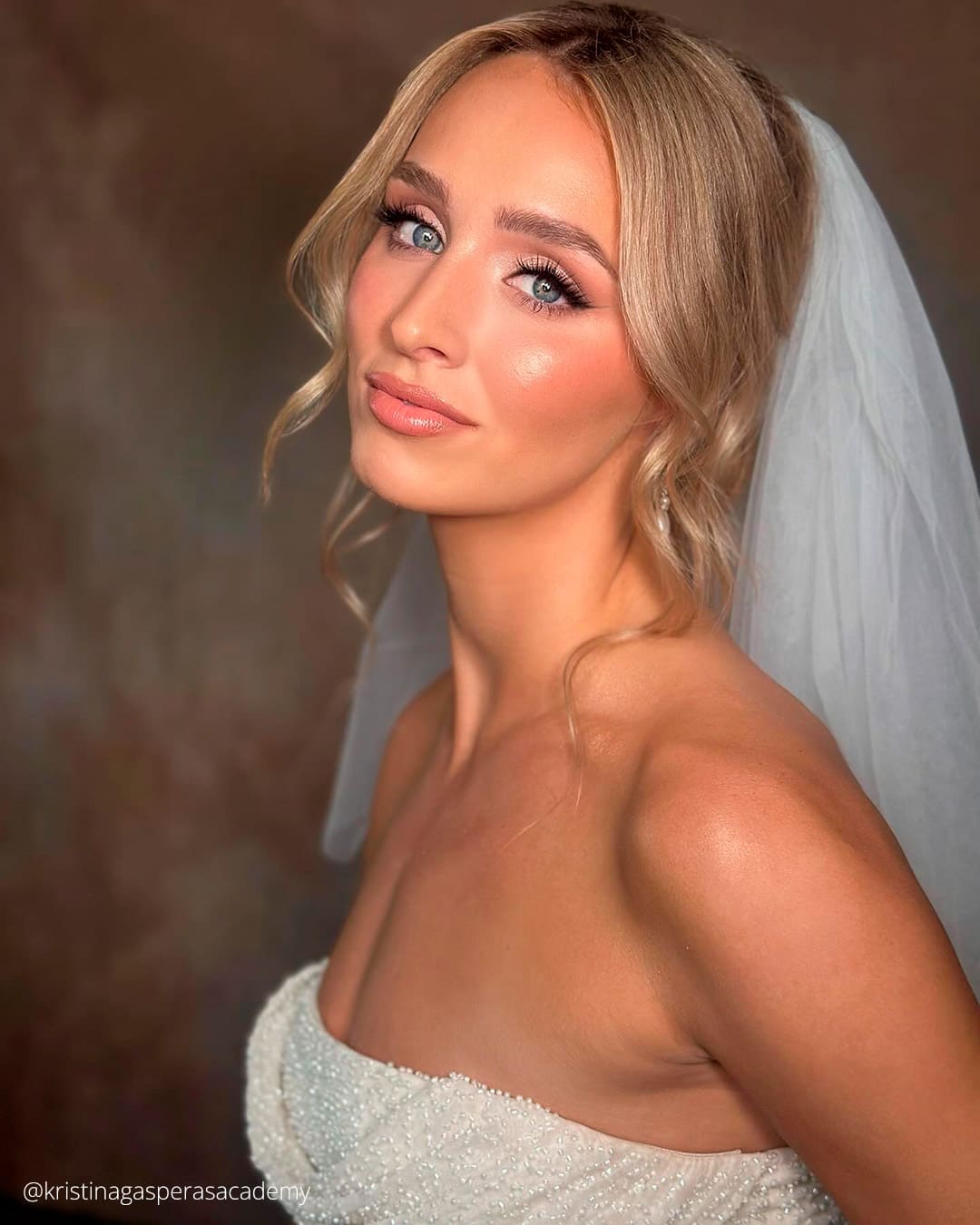
When dreaming up a wedding, many envision a romantic picture of the bride shaped by softness, fluid lines, and natural curls in her hair. Ideal for this mood are loose buns crowned with a veil, half-up creations, and cascading waves of hair worn down with a veil that celebrate natural or curly texture.
A chapel-length veil deepens this romantic sensibility, particularly when adorned with flowers or tiny pearls, contributing a whisper of ethereal charm.
Boho Wedding Hairstyle with Veil
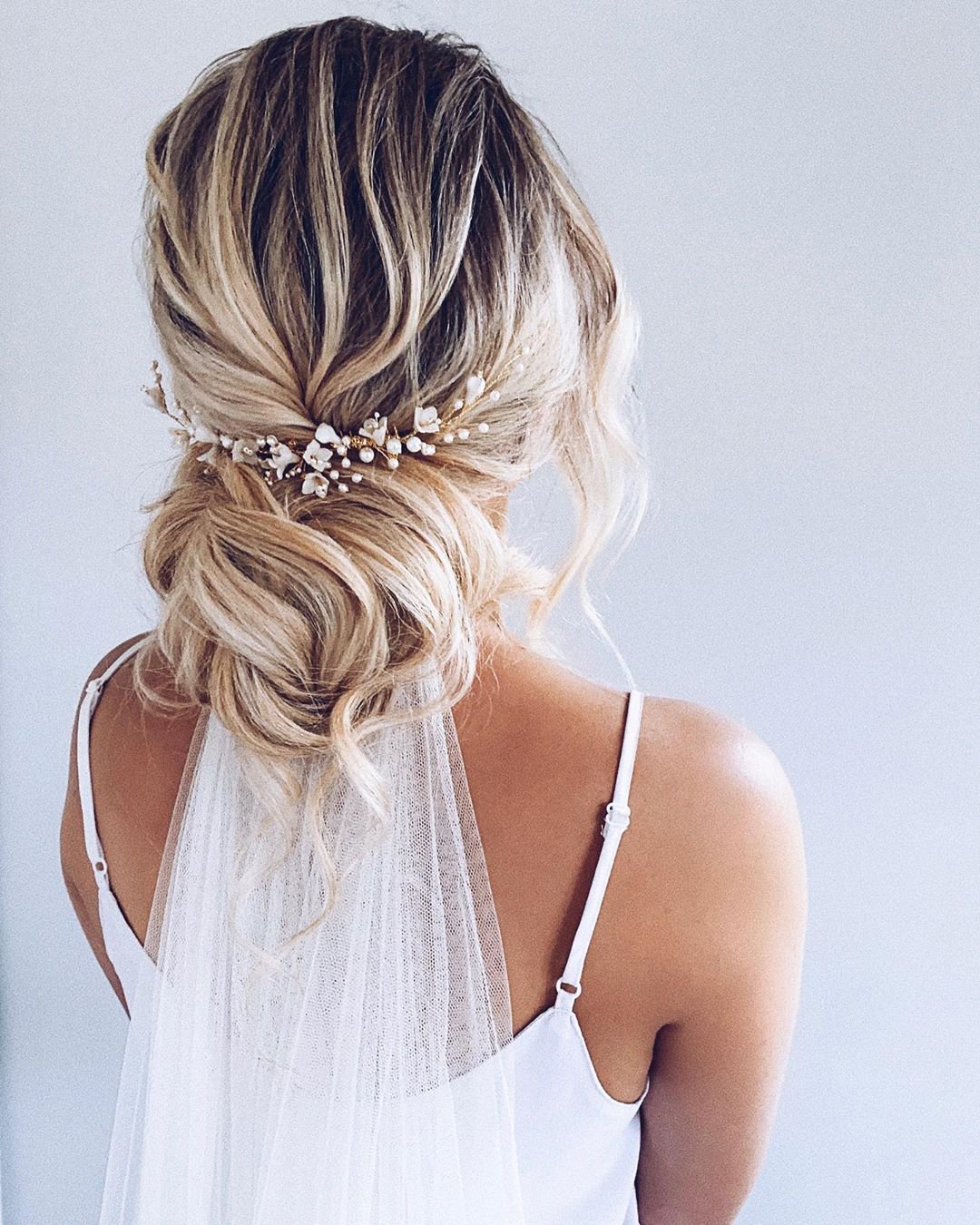


Boho wedding hairstyles must center on natural texture. The winning looks include carefree, textured updos and braided designs, which can be paired effortlessly with half-up half-down styles and veils.
For a bohemian bridal vision with a veil, reach for a Juliet Cap Veil, a Mantilla Veil, or a single-tier veil.
It also feels right at home for a rustic wedding hair updo with a veil. Weave in a touch of whimsical elegance through embellishments like floral appliqués, dainty beadwork, or metallic glints.
These veil selections effortlessly magnify that free-spirited aesthetic.
Vintage Wedding Hairstyle with Veil


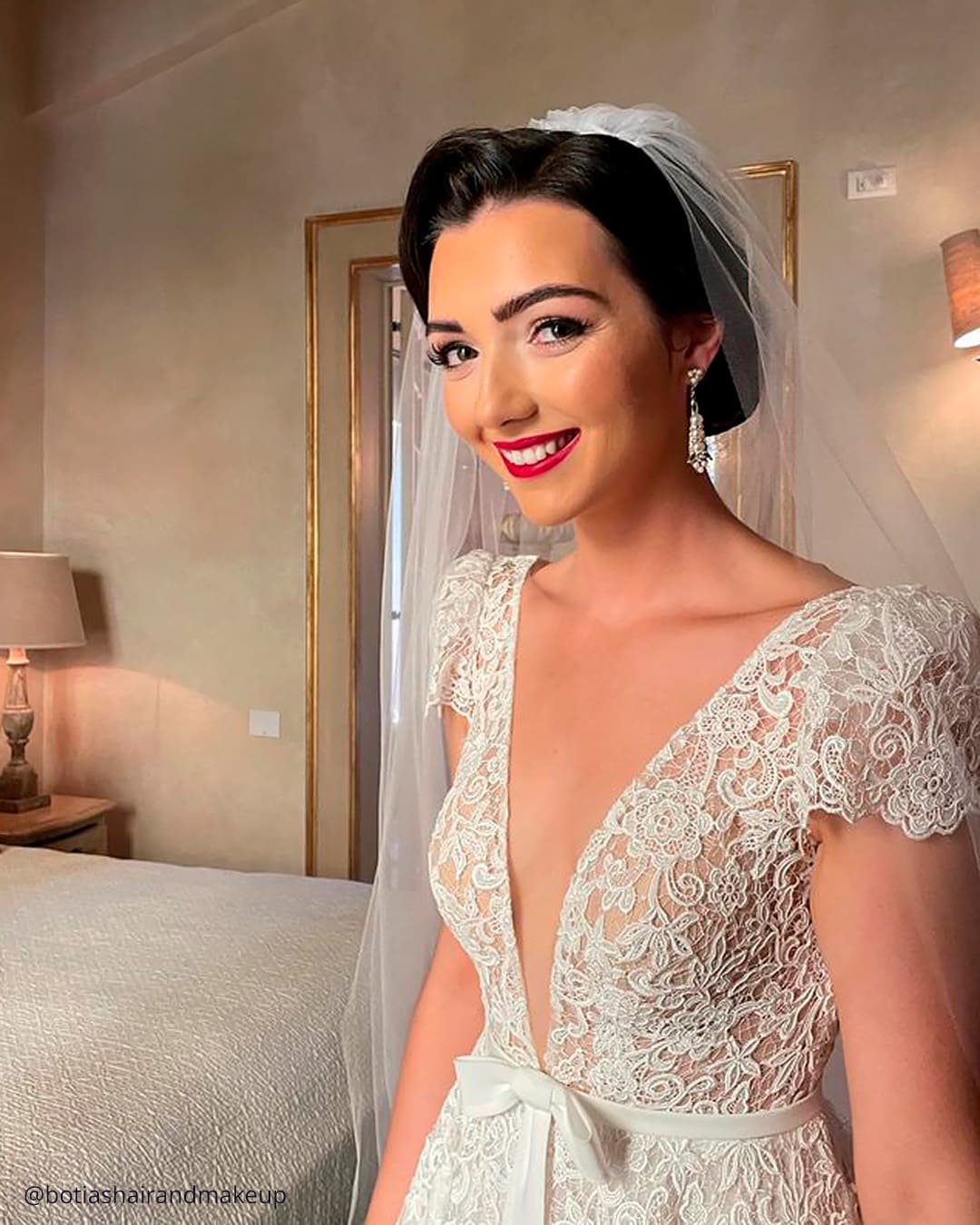

Vintage hairdos for brides borrow the classic refinement and glamour of decades past. Imagine sumptuous Hollywood waves, abundant crown styles, or chic beehive updos.
These dazzling choices find their ideal companions in a birdcage veil, a scalloped lace edge veil, or a graceful fingertip veil.
Bringing pearl, lace, or embroidery into the veil weaves the vintage spirit straight into your ensemble. Those timeless details won’t just amplify the veil’s charm, they’ll absolutely deliver a trace of nostalgic retro glamour that honors an unbeatable style so you can radiate a timelessly chic glow on your wedding day.
Black Wedding Hairstyles With Veil
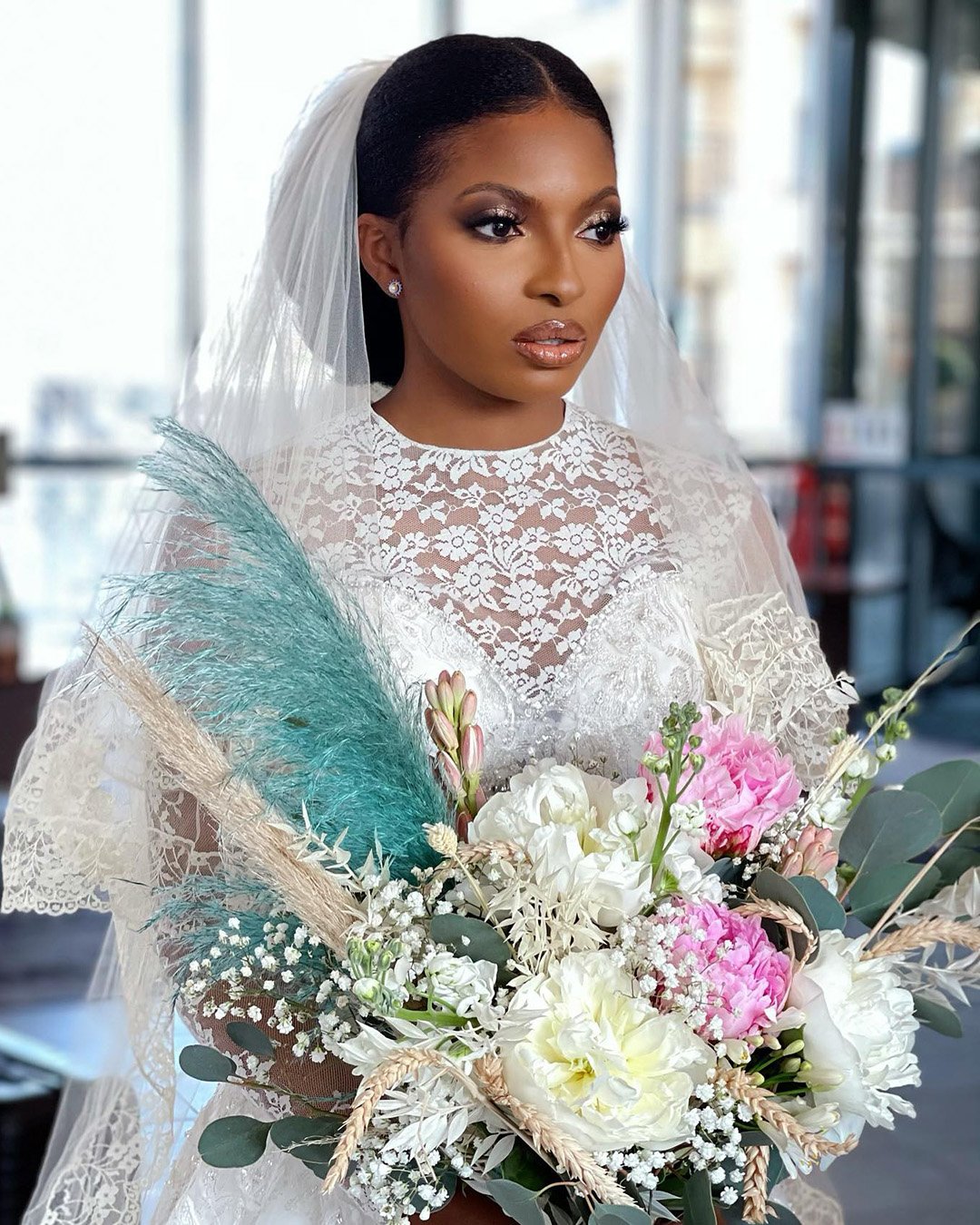

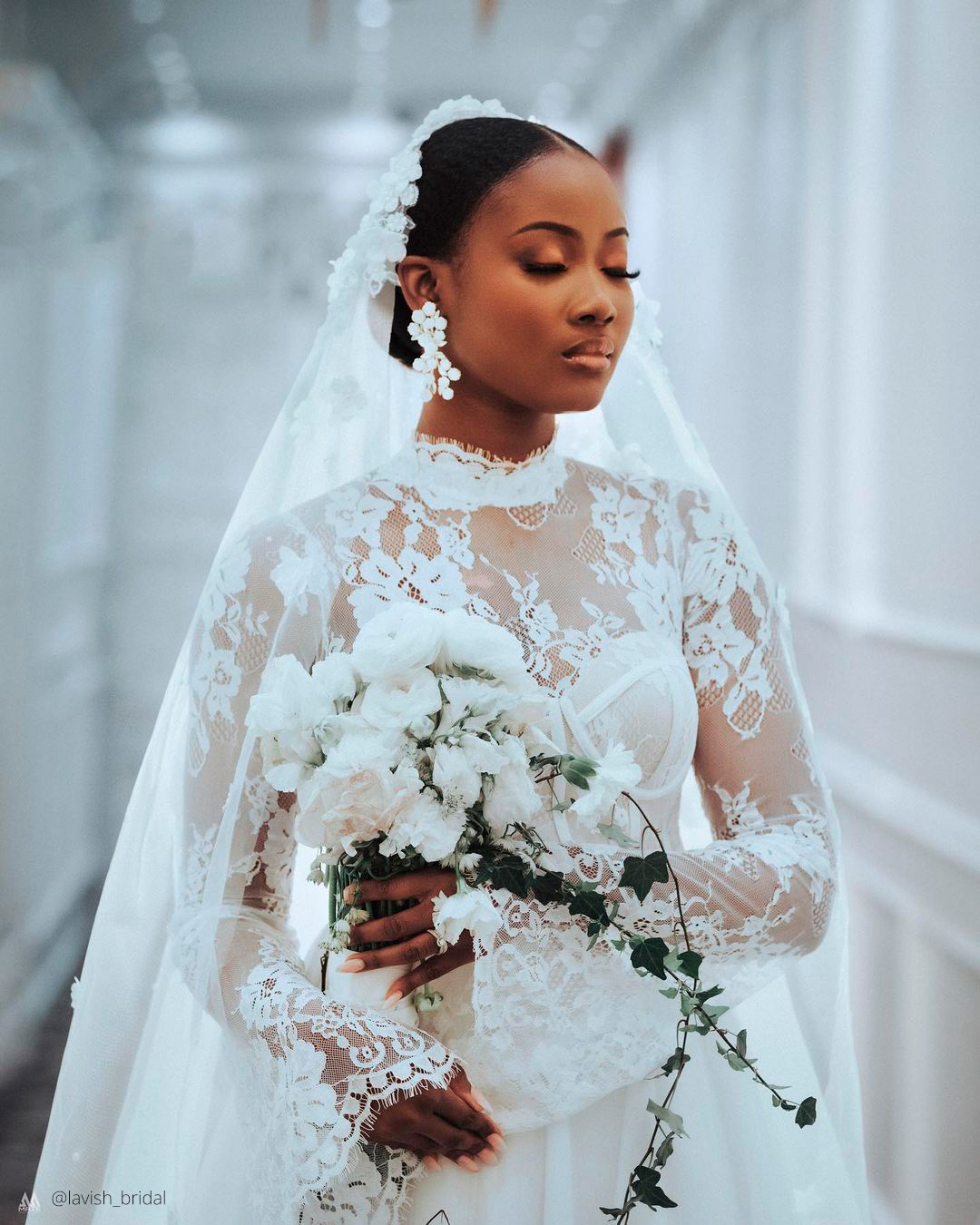
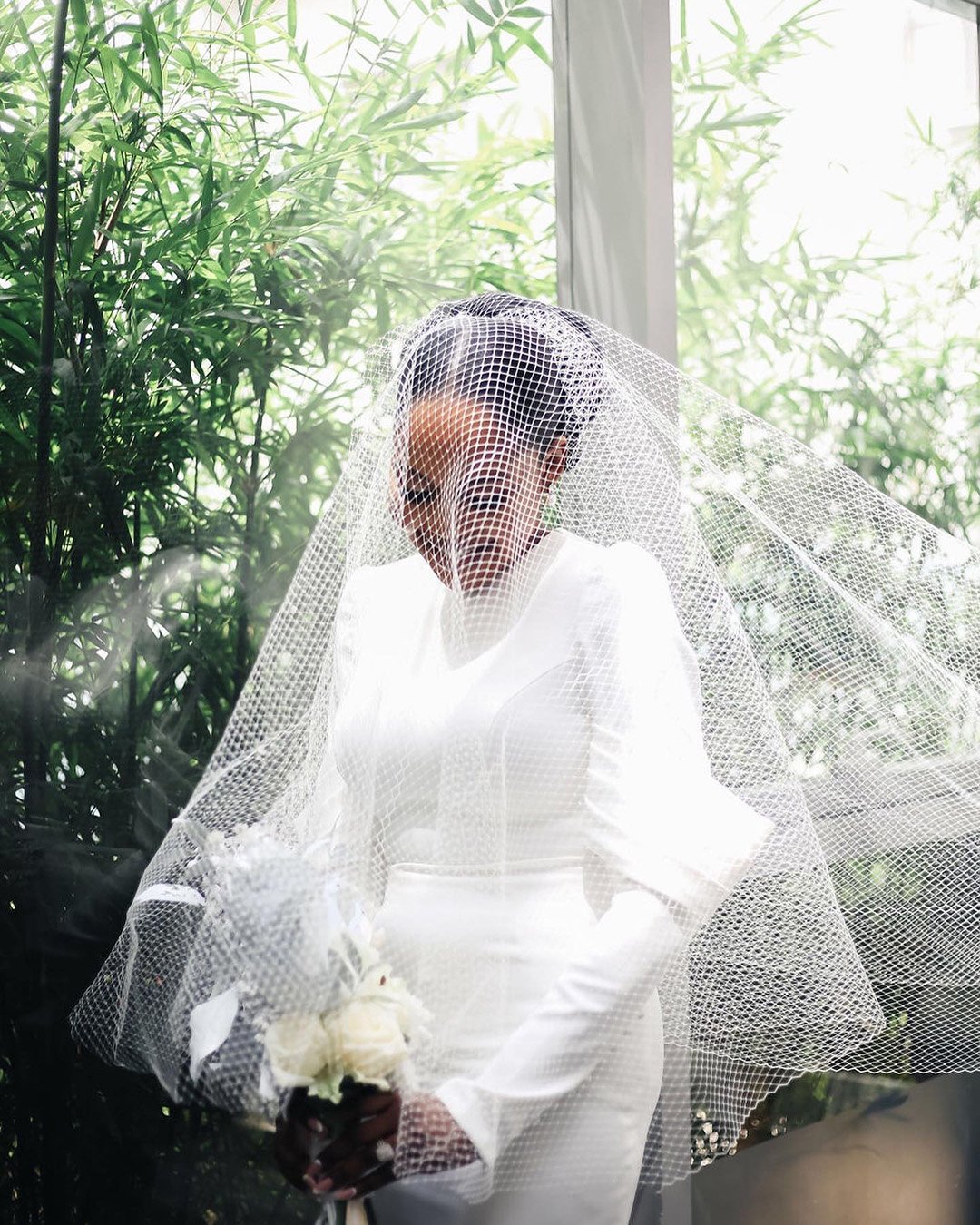
Refined Black bridal hairstyles can look stunning with natural hair or extensions. Soft curls can cluster into a romantic bun, while a wavy ponytail channels a laid-back yet polished spirit.
Brides drawn to greater structure might pick a braided updo, sleek bun, sculpted curls, or a pompadour-inspired silhouette.
When styling natural hair with a veil, pick a placement that stays secure while never concealing the hair’s beautiful texture or shape. Natural coils and protective updos frequently offer a sturdy base for the veil comb.
Bridal braids with a veil can also turn the braided architecture into an inconspicuous attachment spot.
For wedding locs with a veil, twists, or other protective styles, set the comb behind or underneath the main design. This practice helps keep the decorative pattern visible and stops the veil from altering the hairstyle’s form.
Your stylist might add supplementary pins or an elastic anchor depending on your hair’s density and the veil’s weight.
More than anything, the attachment must feel comfortable and utterly secure. It shouldn’t flatten the curls, pull on locs, or warp the structure of protective wedding hairstyles with a veil.
Run the entire look through its paces during your wedding hair trial to ensure it stays balanced all day long.
Wedding Hairstyles With Veil And Tiara
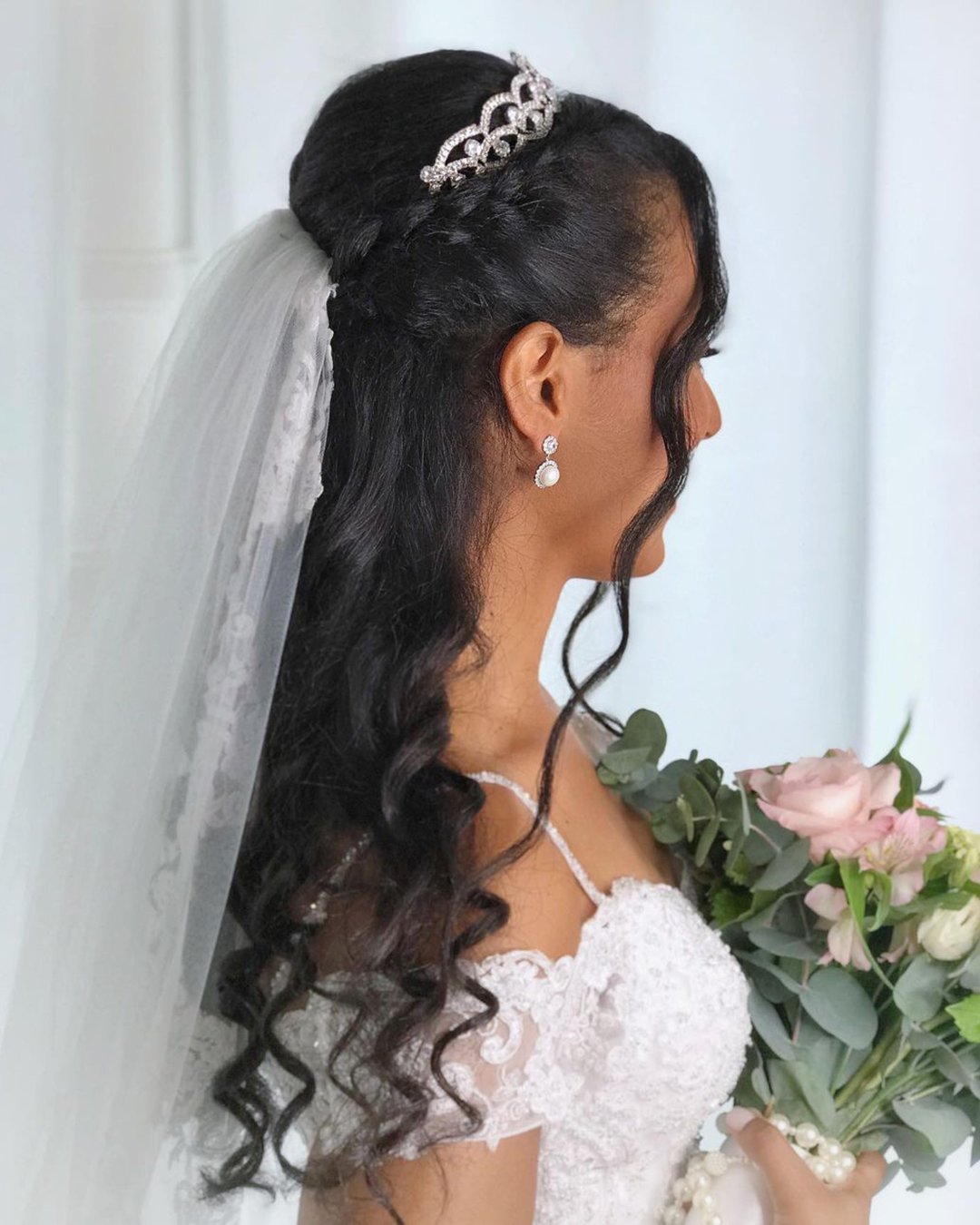


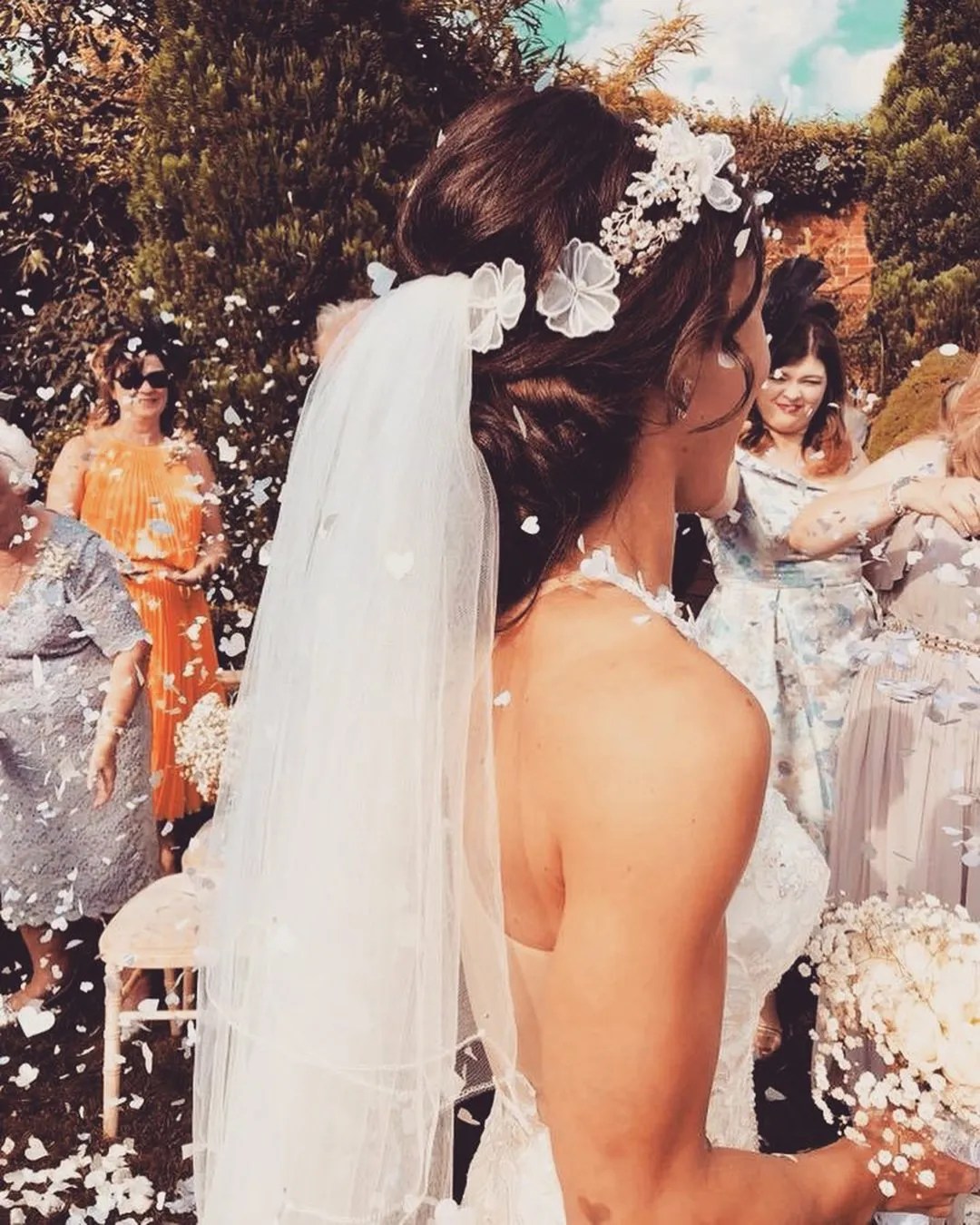
Wedding styles with a crown and veil conjure a graceful, regal bridal presence. A delicate tiara can harmonize with a side-braided design, a romantic half-up look, or a classic low bun.
For something softer, team it with loose curls, finger waves, or a relaxed updo.
To achieve a sleeker result, sweep the hair away from the face and position the tiara near the crown. The remaining curls can then be ushered into a soft or carefree bun, with the veil anchored below.
This arrangement keeps both accessories visible while avoiding visual clutter around the hairstyle.
When blending a tiara and veil, lock the veil in place behind or just beneath the tiara. Allow ample separation so the veil comb with tiara claims its own anchor point instead of leaning on the decorative base.
Separate attachments will help both pieces hold firm and relieve strain on your bridal updo or half-up hairstyle.
Wedding Hairstyles With Veil And Headpiece


Wedding hairstyles incorporating veils and hairpins can channel a romantic, modern, vintage, or subtly understated mood. Bridal clips and barrettes look exquisite nestled into flowing curls, waves, buns, chignons, and ponytails.
Decorative combs and fascinators can also echo the details of your gown and deliver that polished final flourish.
When selecting bridal hair accessories with a veil, draw a clear line between functional hold and decoration. A veil comb, hair grips, or sturdy hairpins should do the work of keeping the veil in position.
Headbands, fascinators, flowers, bridal clips, and decorative combs can then be arranged around the attachment point to round out the look.
A purely decorative hair comb paired with a veil might lack the strength to support the accessory on its own. Grant each component its own secure base and leave enough space between them.
This tactic distributes the weight more evenly and wards off any single spot on the hairstyle from feeling strained or sore.
You can nestle a decorative comb above the veil, slightly to one side, or looping around the base of an updo. Hairpins can be sprinkled throughout the style or clustered near the veil to build a continuous motif.
Headbands, ribbons, and petite hats also present lovely alternatives for brides who prefer a vintage-inspired or less conventional direction.
Bridal Look with Veil and Flowers


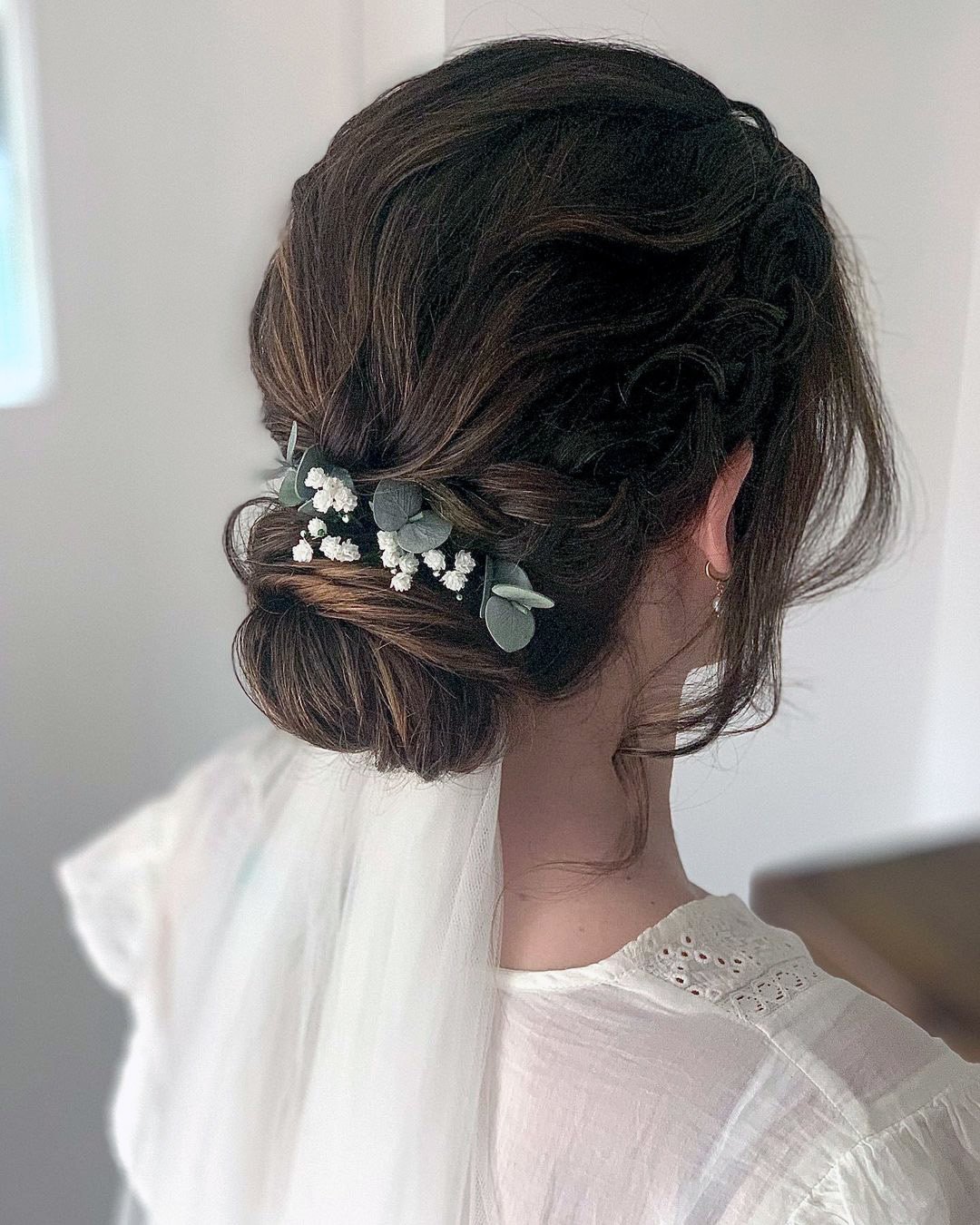
Wedding hairstyles with veils and flowers are breathtaking, and there’s simply no getting around that fact. Floral-veil pairings hold a special place in the heart for garden, rustic, beach, woodland, and country weddings.
They complement the Mermaid silhouette, tea-length dresses, slips, strapless designs, and mono-strap gowns beautifully. Match a flower crown woven from wispy petals, rich greenery, and Scottish ferns into a partial crown.
Combine this crown with a veil on your selected hairstyle to bestow an ethereal edge. You can also fashion floral petals into headbands using textural succulents to grant an organic, earthy feel.
Then there’s the option of flower combs featuring multiple blossoms to inject vibrant pops of color.
Combs are perfectly suited for partial updos. And for the minimalist at heart, a single, dramatic bloom tucked into your hair would do the trick.
Wedding Veil Alternatives
Alternatives to a classic wedding veil can either craft flowing shapes behind the bride or introduce decoration directly into the hairstyle. The best pick hinges on the dress silhouette, hairstyle, attachment location, and the desired freedom of movement.
Bridal Cape
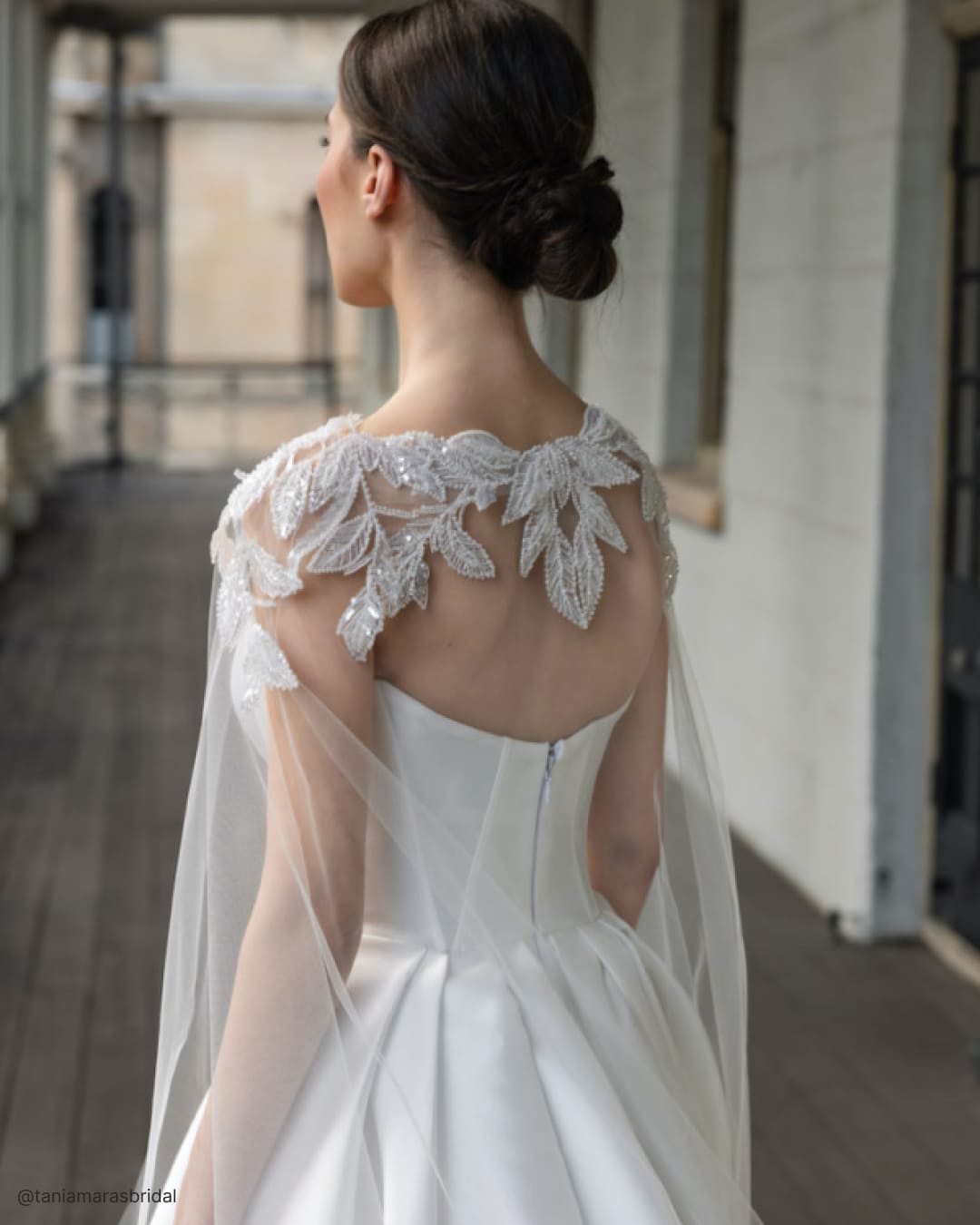
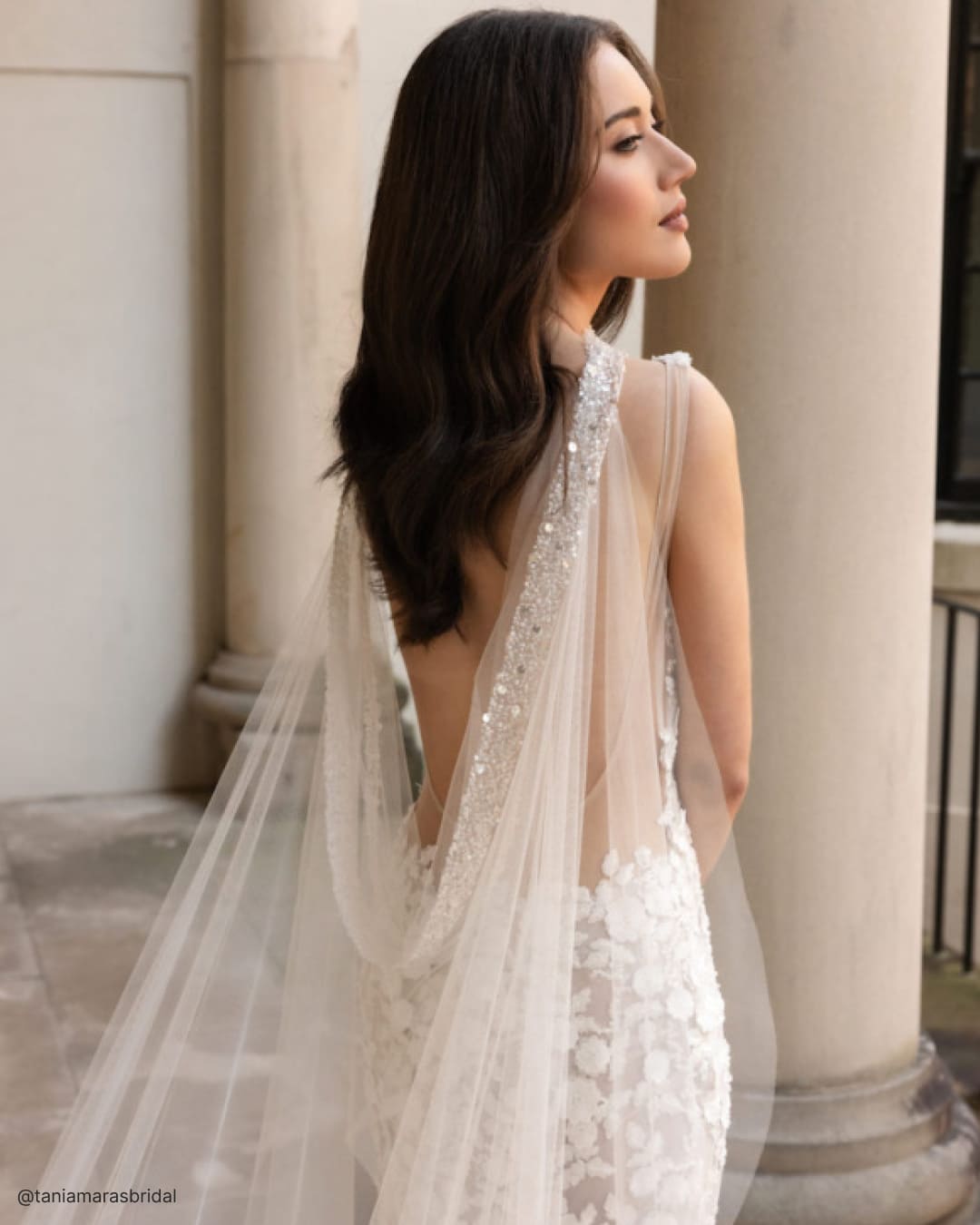

A bridal cape fastens to the dress or shoulders, generating dramatic sweeping length while placing absolutely no weight on the hair. It pairs especially brilliantly with understated gowns and sculptural silhouettes.
Bridal Wings


Bridal wings secure to the shoulders or straps, leaving the hairstyle completely visible. They deliver gorgeous motion while keeping the head and neck entirely unrestricted.
Floral Crown


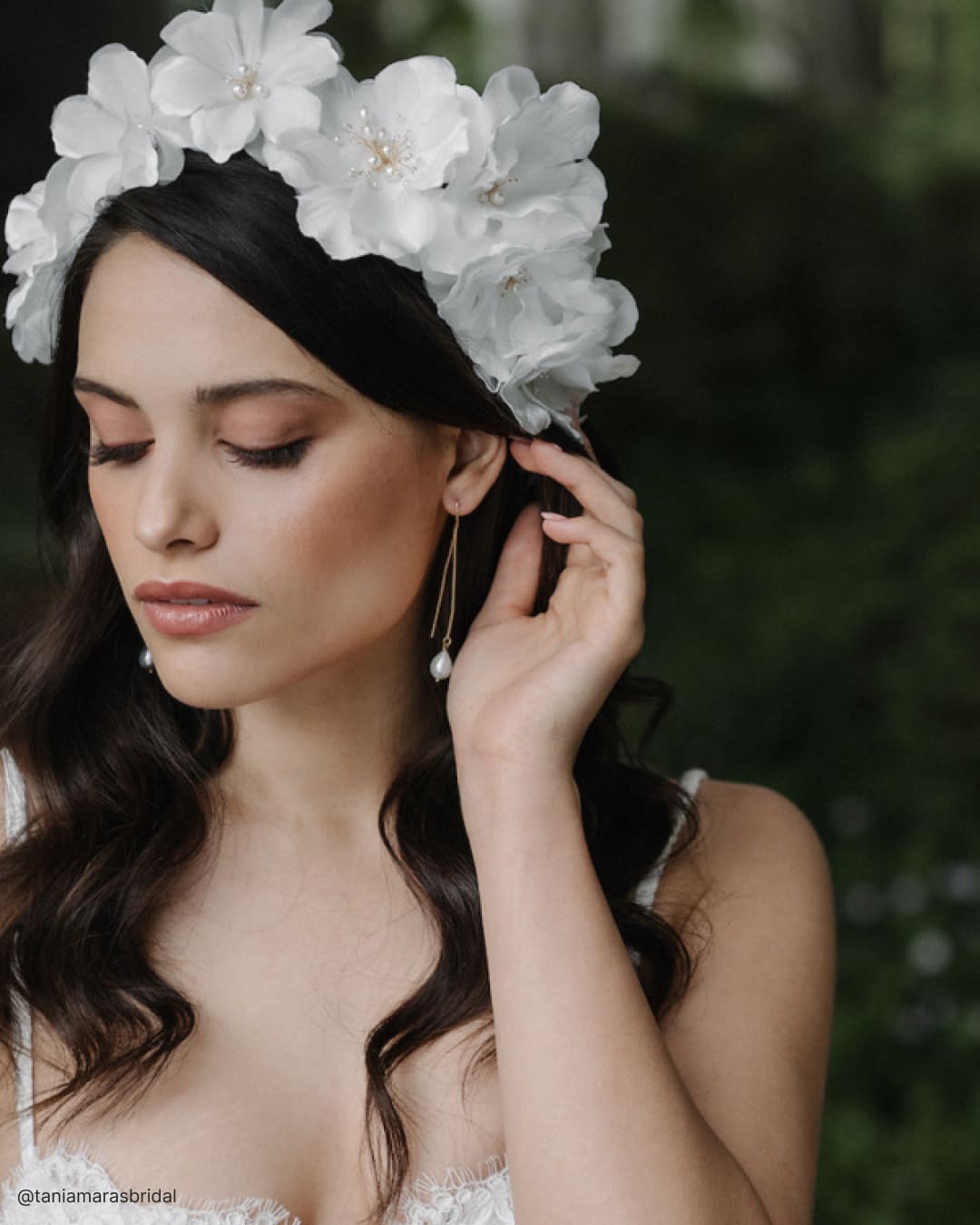
A floral crown can step in for the veil at garden, boho, beach, or rustic weddings. Fresh or preserved flowers contribute texture but require a snug, comfortable fit to stay put.
Bridal Hair Comb


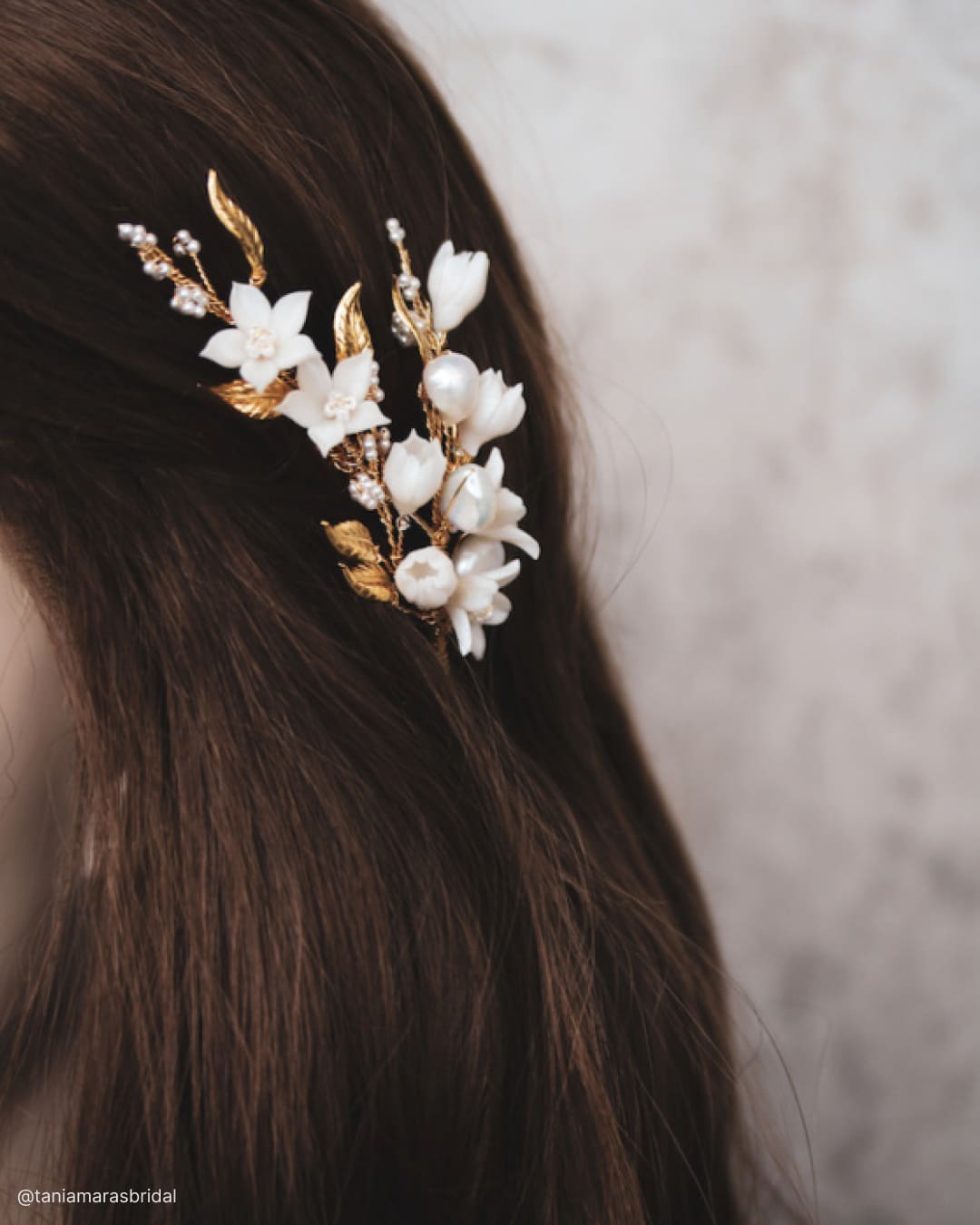
A bridal hair comb serves as a compact choice for an updo, half-up style, or side-swept hair. It introduces detail without any trailing fabric or restrictions on movement.
Decorative Hair Pins
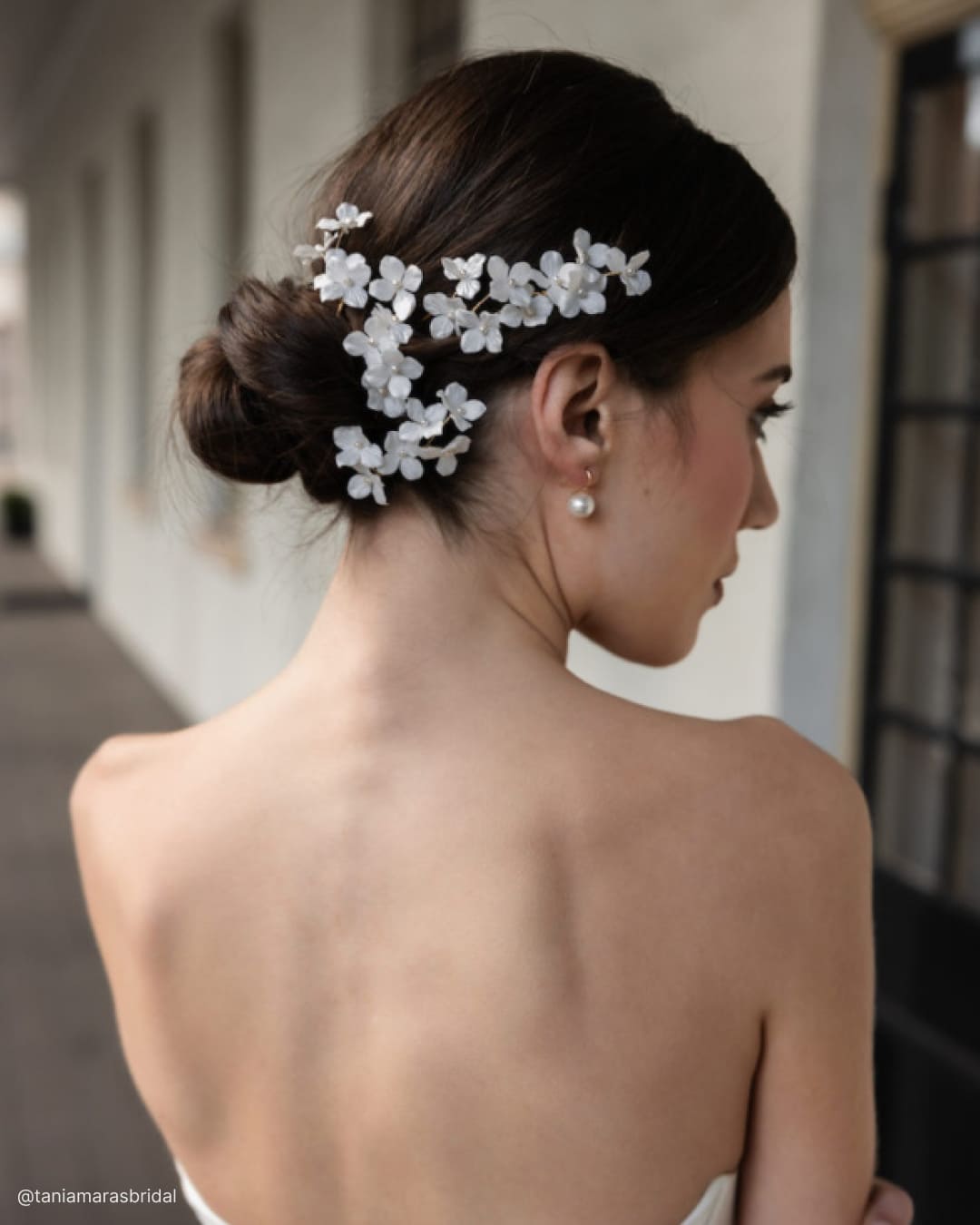

Decorative hair pins suit a clean, veil-free bridal aesthetic. They can be scattered throughout a bun, braid, twists, or loose waves without interfering with the dress.